
Social Media Withdrawal: What Happens When You Stop Using Social Platforms?
Juan F.
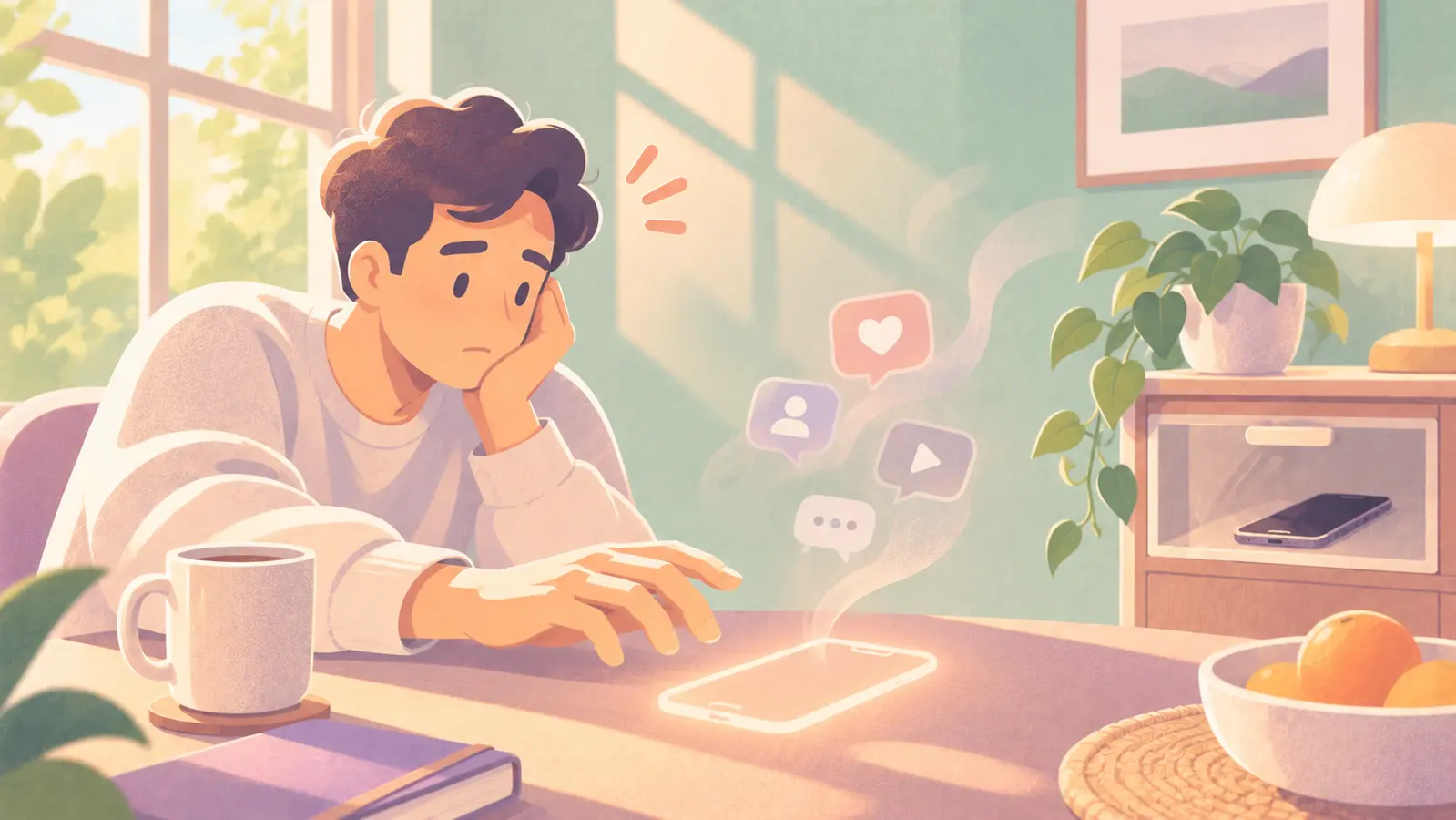
What happens when you stop using social media? Explore common experiences, withdrawal-like feelings, research on social media detoxes and how to build healthier habits.
ou decide you're spending too much time on social media, so you delete Instagram or TikTok from your phone. Perhaps you've noticed how often you check your feeds without thinking, or how easily a few minutes of scrolling turn into half an hour.
At first, the change seems straightforward. But the next morning, you instinctively reach for your phone. Later, while waiting for something, you open it again before remembering that the app is gone. You might feel bored, restless, or strangely curious about what you're missing.
These experiences are sometimes called social media withdrawal.
The term describes the uncomfortable feelings and urges people may experience when they stop using platforms that have become part of their daily routines. But despite its name, social media withdrawal isn't necessarily comparable to withdrawal from drugs or alcohol, and the research doesn't establish that everyone experiences a recognizable withdrawal syndrome.
What's more interesting is what these feelings reveal about our habits. When something as simple as not checking an app becomes uncomfortable, it may be worth understanding what role that app has come to play in everyday life.
What Is Social Media Withdrawal?
Social media withdrawal refers to the urges, discomfort, or changes in behavior that some people experience when they stop or significantly reduce their use of social networking platforms.
Someone taking a break from Instagram, TikTok, Facebook, or Reddit might repeatedly want to check their phone, worry about missing updates, feel disconnected from online communities, or find ordinary moments of boredom unusually difficult.
These experiences can feel surprisingly persistent, especially when social media has been part of someone's daily routine for years.
However, social media withdrawal is not an established medical withdrawal syndrome, and feeling uncomfortable without social media doesn't automatically mean you're addicted.
A useful way to understand the experience is to consider how habits develop. If you regularly check Instagram while eating breakfast, waiting in line, or taking a break from work, those situations can become associated with opening the app.
When you remove Instagram, the situations remain. You still finish tasks, experience boredom, and reach for your phone, but the familiar behavior is no longer available.
This helps explain why someone might continue trying to open an app they've already deleted. The action has become part of a routine, and changing that routine takes more than removing an icon from a screen.
For a deeper explanation of this process, our article on why we check our phones so often explores the habits and psychological cues behind automatic phone checking.
Why Does Quitting Social Media Feel So Uncomfortable?
One reason stopping social media can feel difficult is that these platforms serve several purposes at once.
They provide entertainment, social interaction, information, and an easy way to occupy time. When you remove them, you're not necessarily giving up one activity. You're changing several small routines that have become integrated into your day.
Consider boredom. If you've become accustomed to scrolling whenever nothing else is happening, waiting for a bus or sitting alone for a few minutes might suddenly feel unusually quiet. There's nothing inherently wrong with boredom, but it can feel unfamiliar when you're used to having a constant supply of entertainment available.
Another factor is fear of missing out, commonly called FOMO. You might wonder whether friends have posted something important, whether an interesting conversation is happening, or whether everyone is discussing something you haven't seen.
That concern isn't always irrational. Social media can be an important source of communication, particularly for people whose friends, communities, or professional networks organize their interactions through these platforms.
But there's a distinction between missing a meaningful conversation and simply feeling compelled to know what's happening in a feed. Sometimes we return to social media because we genuinely want to connect with someone. Other times, we're responding to the possibility that something interesting might have appeared.
Social media can also become a convenient way to manage uncomfortable emotions. When you're stressed, lonely, or avoiding a difficult task, opening a feed provides an immediate distraction. Removing that option can make those feelings more noticeable, particularly if you haven't developed other ways to respond to them.
None of this means your brain has been damaged or that you've depleted some supply of dopamine. A more useful explanation is that familiar patterns of cues, expectations, and rewards can become difficult to interrupt.
And once you recognize those patterns, you can start changing them.
Is Social Media Withdrawal Real? What Research Says
The discomfort people experience when taking a break from social media is real, but researchers have found mixed evidence about whether it constitutes a distinct withdrawal syndrome.
A particularly relevant 2023 study by Wadsley and Ihssen examined what happened when participants restricted social networking use for one week.
The researchers found changes in mood, including reductions in both some negative and positive feelings. However, the results did not show the general increases in craving and negative emotion that would be expected from a consistent withdrawal syndrome.
This is an important finding because it challenges the assumption that stopping social media necessarily produces symptoms comparable to substance withdrawal.
People can miss social media, feel uncomfortable without it, or struggle to change their habits without those experiences establishing a clinical condition.
Research on the broader benefits of stepping away is similarly mixed.
A 2022 randomized controlled trial involving 154 participants found improvements in wellbeing, depression, and anxiety after a one-week break from major social media platforms.
However, a 2025 meta-analysis published in Scientific Reports, examining ten studies involving 4,674 participants, found no statistically significant overall effects of social media abstinence on positive emotions, negative emotions, or life satisfaction.
Another 2025 meta-analysis published in SSM – Mental Health examined 32 randomized trials involving 5,544 participants and found a small average improvement in subjective wellbeing from interventions that reduced or eliminated social media use.
Taken together, these findings suggest that stepping away can be beneficial, but the effects aren't universal or necessarily dramatic.
The distinction between reducing use and stopping entirely also matters. Someone who regularly loses hours to unwanted scrolling may benefit from creating boundaries, while another person who relies on social media for meaningful friendships may experience little benefit from cutting off those connections.
For a closer look at these findings, we've covered the research in our related article, Social Media Breaks: What Happens When You Stop Checking Your Feeds?.
How Long Does Social Media Withdrawal Last?
There's no scientifically established timeline for social media withdrawal.
Some people find that the urge to check their feeds becomes less noticeable after a few days. Others continue missing particular platforms, creators, conversations, or communities for much longer.
The experience depends on how frequently you used social media, how deeply it was integrated into your routine, and what purposes it served.
Someone who primarily used TikTok to fill spare moments may have a different experience from someone who relied on Instagram to maintain friendships or participate in a community.
It's also worth distinguishing between missing the habit and missing the activity itself.
You might stop automatically reaching for your phone after several days but still miss watching videos from a favorite creator. Or you might discover that you don't miss scrolling at all, but do miss exchanging messages with friends.
Those differences can tell you something useful about which parts of social media were genuinely valuable.
I wouldn't treat a particular number of days as a milestone after which your brain is supposed to reset. Claims that everyone needs seven, fourteen, or thirty days to recover from social media aren't supported by a universally established withdrawal timeline.
A short break can still be worthwhile. But its value comes from what you learn about your habits, not simply the number of days you spend away.
How to Make Social Media Withdrawal Easier
If you're trying to reduce social media use, I'd start by making the change specific rather than deciding that you need to abandon every platform.
Think about what you're actually trying to accomplish. Perhaps you want to stop checking TikTok during work, spend less time comparing yourself with others on Instagram, or avoid scrolling before bed.
Those are clearer goals than simply deciding to quit social media.
Next, consider what you'll miss when you stop using the platform. If friends normally contact you through Instagram, arrange another way to communicate or preserve access to the conversations that matter. There's little benefit in making yourself feel unnecessarily isolated just to avoid an entertainment feed.
It also helps to recognize the moments when checking has become automatic. If you reach for your phone every morning before getting out of bed, try changing that routine rather than relying solely on remembering not to open an app. Keeping your phone away from your bed, using a separate alarm, or establishing a different first activity can make a meaningful difference.
Our guide to creating a phone-free morning routine offers a practical starting point.
I'd also think about what you want to do with the time you recover.
This doesn't mean every moment needs to become productive. Sometimes it's perfectly reasonable to sit quietly, take a walk, or relax without doing anything in particular. But if scrolling has become your default entertainment, having a few enjoyable alternatives can make changing that habit easier.
Maybe you want to read more, spend time outside, work on a hobby, or simply have fewer interruptions when you're with other people. If you need some ideas, our article on what to do instead of doomscrolling offers alternatives for both short breaks and longer periods of free time.
And if you find yourself returning to an app after deciding not to use it, don't automatically interpret that as a failure. It may simply mean the original habit is still strong or that your boundaries aren't practical enough.
Adjusting the environment around the behavior is often more useful than repeatedly making the same promise to yourself.
Should You Quit Social Media Completely?
For most people, reducing social media use doesn't need to be an all-or-nothing decision.
There's a meaningful difference between using Instagram to communicate with friends and opening its Reels feed dozens of times throughout the day. One may serve a purpose you genuinely value, while the other may be consuming more time than you'd like.
A temporary break can help you identify that difference. By stepping away from certain apps for a week, you may discover which activities you genuinely miss and which were simply filling time.
Afterward, you can decide what you want to reintroduce.
Perhaps you'll keep Instagram available in the evening, stop using TikTok during work, or turn off notifications that repeatedly encourage you to return to your feeds.
The objective isn't necessarily to prove that you can live without social media. It's to build a relationship with it that reflects what you actually want from your time.
Complete abstinence may be appropriate for some people, particularly when a platform consistently interferes with important responsibilities or feels difficult to control. But for others, moderate, intentional use may be both more practical and more sustainable.
Where LightScroll Fits In
One challenge with reducing social media use is that making a decision doesn't automatically change the habit.
You might decide to stop checking Instagram during work, only to find yourself reaching for it the next morning without thinking.
That's part of why we created LightScroll.
LightScroll helps you establish boundaries around selected apps and websites on supported Apple devices through scheduled Controls, daily time allowances, and Frictions that encourage you to pause before opening something.
For example, you could restrict distracting social apps during your workday while leaving them available for a limited period in the evening. If you want stronger protection, optional Hardcore Mode can make your chosen restrictions harder to change.
LightScroll isn't a treatment for addiction or withdrawal. It's simply a way to make the boundaries you've chosen easier to follow, particularly when automatic checking has become difficult to interrupt.
You can learn more about how LightScroll works.
What You Learn When You Stop Checking
Taking a break from social media can reveal how closely certain apps have become tied to your daily routines.
You may notice yourself reaching for your phone without thinking, feeling unusually bored during quiet moments, or worrying about conversations you're missing. Those experiences can be uncomfortable, but they don't necessarily mean you're experiencing a clinical withdrawal syndrome.
They may simply reveal how familiar and automatic certain behaviors have become.
The research doesn't suggest that everyone needs to quit social media or that abstinence guarantees better mental health. It does suggest that changing how we use social platforms can be worthwhile, particularly when our habits no longer match our intentions.
The most useful outcome of a break may be discovering which parts of social media you genuinely value and which you can comfortably live without.
You don't need to stop using social media forever. You just need to make sure using it remains a choice.
Sources and Further Reading
- Wadsley, M., & Ihssen, N. (2023). Restricting Social Networking Site Use for One Week Produces Varied Effects on Mood but Does Not Increase Explicit or Implicit Desires to Use SNSs.
- Lambert, J. et al. (2022). Taking a One-Week Break from Social Media Improves Well-Being, Depression, and Anxiety: A Randomized Controlled Trial.
- The Effects of Social Media Abstinence on Affective Well-Being and Life Satisfaction: A Systematic Review and Meta-Analysis (2025). Scientific Reports.
- The Effects of Social Media Restriction: Meta-Analytic Evidence from Randomized Controlled Trials (2025). SSM – Mental Health.