
Why Do We Check Our Phones So Often? The Psychology of Phone Checking
Derek C.
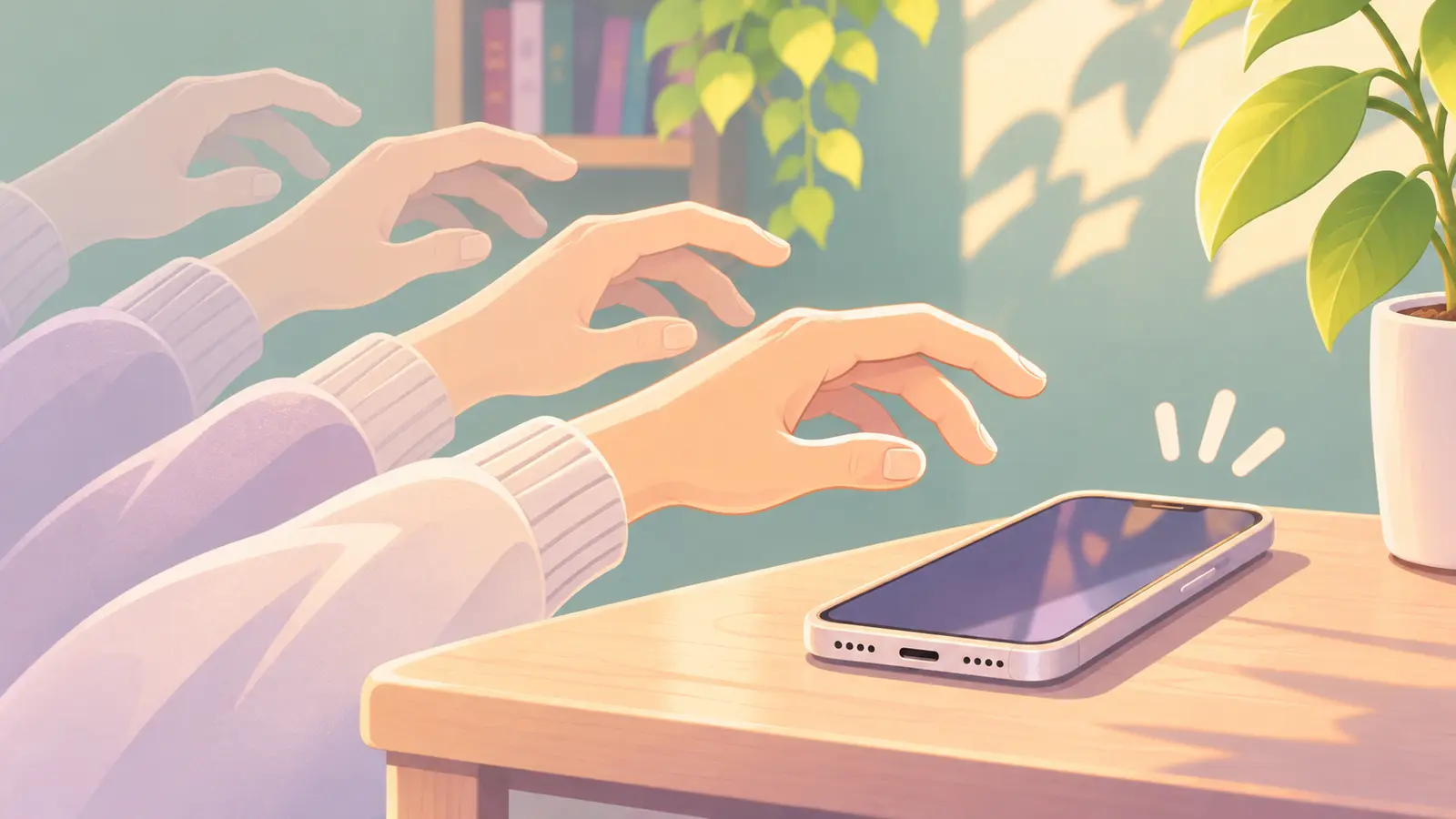
Why do we check our phones even when nothing is happening? Explore the psychology of phone checking, how habits form and practical ways to regain control.
Have you ever picked up your phone, unlocked it, and realized you didn't actually have anything you needed to do? Maybe you checked the time, glanced at your messages, opened Instagram for a minute, and put it back down. Then, ten minutes later, you found yourself reaching for it again, even though you knew there probably wasn't anything new.
It's a strange habit when you stop to think about it. We don't usually check our refrigerators every few minutes to see whether new food has appeared, yet we can find ourselves repeatedly checking our phones without expecting anything in particular. Sometimes we're bored, sometimes we're curious, and sometimes we don't even remember making the decision to pick them up.
So why do we check our phones so often? And perhaps more importantly, why do we keep checking them even when there are no notifications?
The answer has quite a bit to do with how habits develop, how we respond to uncertainty, and how easily our phones have become part of the little gaps throughout our day. Once you understand the psychology behind phone checking, it's easier to recognize the behavior in yourself and decide whether it's something you'd like to change.
Why Checking Your Phone Becomes a Habit
One of the interesting things about smartphones is that they always offer the possibility of something new. You might open yours and find a message from a friend, an interesting video, a notification, or absolutely nothing at all. You never know exactly what will be waiting, and that uncertainty can be part of what brings you back. Psychologists sometimes explain this through intermittent reinforcement, where a behavior is rewarded occasionally rather than every time it occurs. The reward doesn't have to be particularly exciting. It might simply be a new message, an interesting post, or the satisfaction of discovering that something has changed since you last checked.
Over time, the act of checking can become associated with that possibility, even when you don't have a specific reason to look. Researchers have been studying this behavior since the early days of smartphones. In a 2012 study published in Personal and Ubiquitous Computing, Antti Oulasvirta and his colleagues examined what they called checking habits: brief, repetitive inspections of information that's readily available on a phone. They found that these habits could develop around quickly accessible information, such as messages and updates, and sometimes lead people into longer periods of phone use than they'd originally intended.
That probably sounds familiar. You open your phone to see whether someone has replied, but once it's already in your hand, checking another app feels almost effortless. You might spend a minute looking at Instagram, glance at your email, and then open Reddit without any particular plan. Eventually, the behavior becomes less about finding something important and more about following a familiar routine. In much the same way that you might automatically reach for the television remote when you sit on the couch, reaching for your phone becomes something you do without giving it much thought.
Why We Check Even Without Notifications
Notifications certainly contribute to frequent phone checking. When your device vibrates or displays a red badge, it's giving you a reason to look. Sometimes that reason is important, like a message from someone you care about or a reminder about an appointment. Other times, it's simply an app letting you know that something new is available. Either way, the notification creates a small interruption and an invitation to see what's happening.
What's more interesting is how often we check our phones without receiving a notification at all. Think about the moments when you're working on something difficult, watching television, or waiting for someone to arrive. You might suddenly feel like looking at your phone, even though it hasn't made a sound. Maybe you're curious whether someone responded to your message, or perhaps you just want a brief distraction from whatever you're doing. Researchers distinguish between external triggers, like notifications, and internal triggers, such as boredom, curiosity, fatigue, or simply remembering that your phone is nearby.
A 2023 study published in Applied Cognitive Psychology explored this behavior through the concept of spontaneous smartphone checking. The researchers developed a measure of how often people direct their attention toward their phones without an external prompt or a clear conscious goal. It's an interesting way to describe something many of us experience every day. We don't necessarily need our phones to ask for our attention anymore. Sometimes we've simply learned to offer it.
Boredom plays a role here, too. Waiting in line, sitting on a train, taking a break from work, or waiting for the microwave to finish are all moments when reaching for your phone can feel almost automatic. And it makes sense. Your phone offers an enormous amount of entertainment, information, and social interaction with practically no effort. If you're bored, you can find something interesting within seconds. The trouble is that this can gradually become our default response to every quiet moment, even when we weren't particularly interested in using our phones in the first place.
There's also a connection between habitual checking and procrastination. In a 2021 study published in Mobile Media & Communication, researcher Adrian Meier examined mobile checking habits among university students and found that stronger checking habits and urges to check were associated with greater procrastination. That doesn't mean phones automatically make us unproductive, but it helps explain why checking can become such an appealing distraction when we're trying to concentrate. The moment a task becomes difficult or uncomfortable, our phone offers an easy escape. We might only intend to take a thirty-second break, but it's not unusual for that break to become considerably longer.
How Often Do People Actually Check Their Phones?
Probably more often than many of us realize. A 2024 study published in Media Psychology tracked smartphone behavior among 205 participants and found that, during the baseline period, people checked their phones approximately 86 times per day on average. That's not a universal average for everyone who owns a smartphone, and checking frequency varies considerably between people, but it gives you an idea of how easily these little interactions can accumulate.
It's also a good reminder that total screen time doesn't tell the whole story. Imagine two people who each spend three hours a day on their phones. One might spend most of that time talking to friends, watching a movie, or working on something creative. The other might spend those same three hours checking social media and messages dozens of times throughout the day. Their screen-time totals are identical, but their experiences are quite different. One person's use might be concentrated in a few activities they genuinely enjoy, while the other is repeatedly interrupting work, conversations, or other parts of their day.
That's why I think it's worth paying attention to how often you're checking your phone, not just how long you're using it. If you're constantly interrupting things you care about to look at your screen, reducing those interruptions might be more valuable than simply trying to achieve a lower daily screen-time total. And frequent checking doesn't automatically mean you have a phone addiction. Smartphones are useful, and plenty of people check them regularly for legitimate reasons. The more meaningful question is whether the habit feels difficult to control or regularly gets in the way of things you'd rather be doing.
Why Turning Off Notifications Isn't Always Enough
One of the first things people recommend when you're trying to spend less time on your phone is disabling notifications. It's sensible advice, and I'd still encourage you to try it if your phone is constantly interrupting you. But the research offers an interesting complication.
In that same 2024 Media Psychology study, researchers asked participants to disable notifications for a week and examined what happened to their phone use. Surprisingly, turning off notifications didn't significantly reduce how frequently participants checked their phones or their overall screen time. It also didn't produce improvements across several other measures of digital wellbeing. However, participants did report feeling that their checking habits were less automatic, and some experienced a greater fear of missing out.
I find that particularly interesting because it suggests that simply removing the things asking for our attention doesn't necessarily stop us from looking. If you've become accustomed to checking your phone whenever you're bored, distracted, or waiting for something, you might keep doing it even when the screen stays silent. The original prompts may be gone, but the habit remains. So while turning off unnecessary notifications is a good place to start, changing the circumstances that lead you to reach for your phone can be just as important.
How to Stop Checking Your Phone So Often
If you're interested in checking your phone less frequently, I'd begin by noticing when the habit shows up in your own life. You don't need to record every pickup or become obsessed with your screen-time statistics. Just pay attention for a day or two. Do you reach for your phone when you're bored, waiting for something, feeling stressed, or trying to avoid a difficult task? Do you check it during conversations or immediately after finishing another activity? Once you recognize those moments, you can start making changes that actually address the habit rather than simply telling yourself to use your phone less.
For example, if you constantly check your phone while working, try putting it somewhere you can't reach automatically. If you tend to scroll first thing in the morning, charge it away from your bed and give yourself a little time to wake up before opening social media. You might also try moving distracting apps away from your Home Screen, so that opening Instagram or Reddit requires a more deliberate decision. These are small adjustments, but they make it easier to notice when you're reaching for your phone simply because it's available.
Another useful habit is asking yourself what you're actually picking up your phone to do. If you're checking a message, looking up directions, or adding something to your calendar, there's no reason to make that complicated. But if you realize you're reaching for it without any particular purpose, you have an opportunity to leave it alone. You don't need to question every interaction or treat your phone like something you should feel guilty about using. The idea is simply to become a little more aware of when you're making a choice and when you're following a routine.
And perhaps most importantly, it's worth getting comfortable with occasionally having nothing to do. You don't need to fill every spare moment with a video, message, or social media post. Sometimes it's nice to wait for your coffee, take a walk, or sit outside without needing to check something. You don't have to replace those moments with another productive activity, either. A little quiet can be enjoyable in its own right, and not every minute needs to be filled with information or entertainment.
If you want to see whether these changes are helping, your phone's screen-time settings can be useful. On iPhone, you can review pickups and app usage under Settings → Screen Time. Rather than focusing exclusively on reducing your total hours, consider whether you're checking less automatically and spending more uninterrupted time on the things you care about.
Where LightScroll Fits In
Sometimes understanding a habit is easier than changing it. You might know you check Instagram too often during work, but still find yourself opening it almost without thinking. That's part of the reason we created LightScroll.
LightScroll helps you create boundaries around selected apps and websites through scheduled Controls, time allowances, and Frictions that encourage you to pause before opening an app. For example, you might decide that you want to enjoy social media in the evening but avoid checking it throughout the workday. Or perhaps you'd like to give yourself some uninterrupted time in the morning without giving up access to important messages and useful tools. Rather than making those decisions over and over again, you can establish your preferences ahead of time and make the habit of checking a little less automatic.
The idea isn't to stop you from enjoying your phone. It's to make using it more deliberate, especially when opening certain apps has become something you do without thinking. You can learn more about how LightScroll works, or explore our other guides on reducing unnecessary screen time.
You Don't Have to Check Everything All the Time
One of the interesting things about habitual phone checking is how ordinary it feels. We reach for our phones so frequently that we often stop noticing we're doing it, and most of the time, there's no particularly important reason behind it. We're curious, bored, waiting for something, or simply following a familiar routine. That doesn't mean there's anything wrong with enjoying your phone. Messaging friends, watching videos, reading, and discovering new things can all be worthwhile ways to spend your time.
But if you find yourself checking it constantly, even when you don't particularly want to, it's worth experimenting with a few changes. Keep your phone out of reach when you're concentrating, silence notifications that don't matter, and occasionally allow yourself a quiet moment without reaching for a screen. You might find that you don't actually miss much by checking a little less often, and that the things you do choose to open become more enjoyable when you're giving them your attention on purpose.
After all, your phone is there to help you communicate, learn, work, and enjoy yourself. It doesn't need to be something you check every few minutes just to make sure nothing has changed.
Sources and Further Reading
- Oulasvirta, A. et al. (2012). Habits Make Smartphone Use More Pervasive. Personal and Ubiquitous Computing.
- Meier, A. (2021). Studying Problems, Not Problematic Usage: Do Mobile Checking Habits Increase Procrastination and Decrease Well-Being? Mobile Media & Communication.
- Digital Daydreaming: Introducing the Spontaneous Smartphone Checking Scale (2023). Applied Cognitive Psychology.
- Beyond the Buzz: Investigating the Effects of a Notification-Disabling Intervention on Smartphone Behavior and Digital Well-Being (2024). Media Psychology.