
Social Media Addiction and How to Regain Control
Juan F.
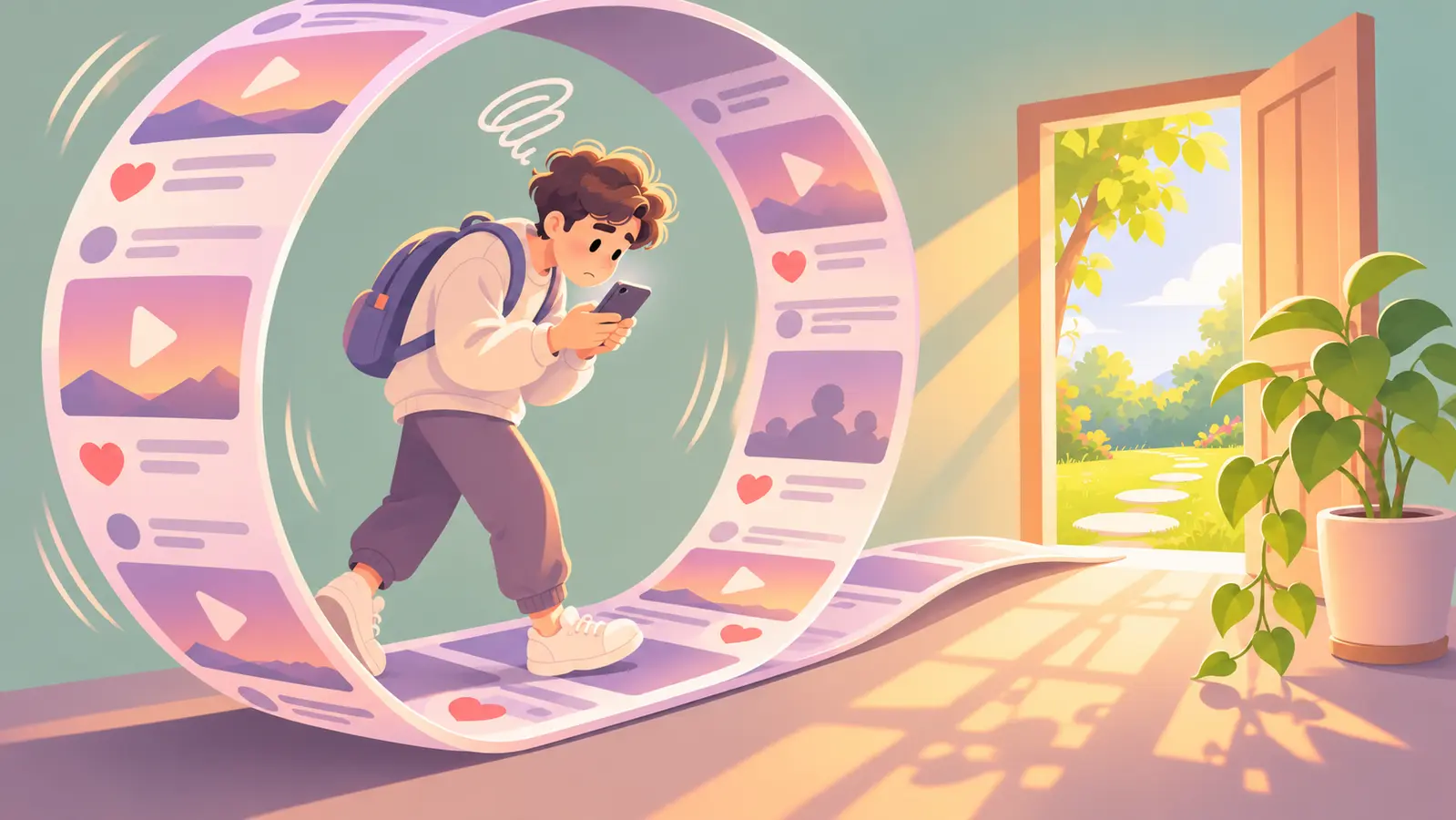
Learn about signs of problematic social media use, why apps can be hard to put down, what research says and practical ways to build healthier boundaries.
You open Instagram to reply to a message. A few minutes later, you're scrolling through Reels. You switch to TikTok, check a notification, return to Instagram, and somehow lose another half hour. You had something else to do, but putting your phone down feels harder than it should.
When social media starts taking more time and attention than you intend, it's worth considering the role it's playing in your life. People often describe this experience as social media addiction, although researchers more commonly use the term problematic social media use to describe patterns involving difficulty controlling use and negative effects on everyday functioning.
The distinction matters because spending several hours on social media doesn't automatically mean you're addicted. What matters more is whether you feel in control of your habits and whether those habits are interfering with your sleep, work, relationships, or other priorities.
Understanding the signs of problematic social media use, why certain platforms are difficult to put down, and how to create healthier boundaries can help you regain control without necessarily deleting every app.
What Is Social Media Addiction?
Social media addiction is a commonly used term for patterns of social media use that feel difficult to control and continue despite negative consequences. Someone might repeatedly spend longer online than intended, struggle to reduce their usage, or feel compelled to check their phone even when they know they should be doing something else.
Researchers often describe these experiences as problematic social media use (PSMU). Some also study the concept of social media use disorder, although social media addiction is not currently recognized as a standalone diagnosis in the DSM-5-TR or ICD-11.
This distinction is important because social media serves many different purposes. Someone might spend several hours using Instagram or LinkedIn for work, creative projects, or maintaining relationships without experiencing significant problems. Another person might spend less time online but repeatedly lose sleep, neglect responsibilities, or feel unable to stop checking.
Rather than focusing exclusively on screen time, researchers increasingly consider the extent to which use involves impaired control, persistent urges, and meaningful disruption to everyday life. The question isn't simply how much time you spend scrolling, but whether social media is affecting the things that matter to you.
7 Signs of Problematic Social Media Use
There isn't a single checklist that can diagnose social media addiction, but certain behaviors may suggest that your relationship with social media is becoming more difficult to manage.
One of the most recognizable signs is spending longer scrolling than you intended. You open an app for a quick check, but one video leads to another until considerably more time has passed than you planned. You might also notice yourself opening social media automatically whenever there's a quiet moment, whether you're waiting in line, taking a break from work, or sitting on the couch.
Another sign is struggling to cut back despite wanting to. Perhaps you've tried setting limits, deleting an app, or taking a weekend break, only to return to the same pattern shortly afterward. This can become particularly frustrating when you recognize that your behavior doesn't match how you actually want to spend your time.
Social media can also begin interfering with sleep and concentration. You might intend to go to bed at a reasonable hour but continue watching videos or checking messages long after you planned to stop. During the day, frequent interruptions can make it harder to focus on work, complete tasks, or give other people your full attention.
Some people also experience restlessness when they cannot check their phones. They might worry about missing conversations, important updates, or social opportunities. This can overlap with FOMO, the fear of missing out, which describes the concern that other people are enjoying rewarding experiences without you.
Perhaps the most important warning sign is continuing to use social media despite meaningful negative consequences. If checking regularly interferes with responsibilities, relationships, sleep, or emotional well-being, it may be worth reconsidering how these platforms fit into your life.
Experiencing some of these behaviors doesn't automatically mean you have an addiction. But if social media is causing significant distress or disruption, speaking with a qualified mental health professional may be helpful.
How LightScroll Can Help You Regain Control
Understanding your habits is an important first step, but awareness alone doesn't always change behavior. You might recognize that Instagram is distracting you throughout the day and still find yourself opening it automatically whenever you're bored or looking for a momentary escape.
That's part of why we created LightScroll. Rather than requiring you to delete social media altogether, LightScroll helps you establish personalized boundaries around distracting apps and websites on supported Apple devices.
With Controls, you can choose which apps to manage, when restrictions apply, and how much time you want to allow. For example, you might restrict Instagram and TikTok during working hours, give yourself a daily social media allowance, or make certain apps unavailable during your evening routine. These boundaries can help separate intentional social media use from checking that happens automatically throughout the day.
LightScroll also offers Frictions, which introduce a pause or short activity before permitted access. Instead of immediately opening an app whenever you feel the urge, you have a moment to consider whether you genuinely want to use it. That small interruption can make automatic checking more deliberate.
For people who regularly remove their own restrictions, LightScroll Plus includes Hardcore Mode, which makes selected Controls harder to edit or delete. You can also configure Overrides that involve waiting or requesting a six-digit unlock code from an accountability partner, adding another layer of commitment when you want additional access.
These features aren't a medical treatment for addiction, and no app can resolve every underlying cause of problematic technology use. But creating deliberate boundaries can help you establish a healthier relationship with the platforms you use.
The goal isn't to eliminate social connection or make your phone unnecessarily restrictive. It's to ensure that social media remains something you choose to use rather than something you automatically reach for. You can learn more about how LightScroll works.
Why Is Social Media So Hard to Stop Using?
Social media platforms combine several features that can encourage repeated checking and extended browsing. Understanding how these features interact with ordinary human habits can help explain why a quick visit so easily becomes a much longer session.
One factor is the absence of natural stopping points. When you read a book, you eventually reach the end of a chapter. When you watch a film, the credits roll. But social feeds are continuously updated, offering another post, video, or recommendation whenever you scroll. Without a clear endpoint, it can be easy to continue browsing longer than you originally intended.
Another factor is unpredictable rewards. Sometimes opening Instagram reveals an interesting message, a funny video, or an update from someone you care about. Other times, there's nothing particularly engaging. Because you don't know what the next refresh will bring, checking can become a repeated habit. Researchers sometimes discuss this in relation to variable reinforcement, although the mechanism shouldn't be oversimplified into the claim that every social media platform works exactly like a slot machine.
Notifications also create repeated opportunities to return to an app. Likes, comments, direct messages, and suggested posts can interrupt your attention throughout the day, sometimes encouraging you to open social media when you hadn't previously intended to. Our article on the hidden cost of push notifications explores how frequent alerts can affect your concentration.
Social connection makes the situation more complicated. Platforms such as Instagram, TikTok, Reddit, and Facebook aren't only sources of entertainment. They're also places where people maintain friendships, participate in communities, organize events, and share meaningful experiences. You might genuinely want to remain connected with those people while spending less time scrolling through unrelated content.
Finally, social media can become a convenient response to boredom, stress, or loneliness. Opening an app offers immediate stimulation or distraction, even if that relief is temporary. When checking becomes your default response to uncomfortable feelings or unstructured time, reducing usage may require changing the surrounding routine rather than simply relying on willpower.
What Does Research Say About Social Media Addiction?
Research into problematic social media use has expanded considerably, but it's important to distinguish general social media engagement from patterns involving impaired control and negative consequences.
A 2024 systematic review and meta-analysis published in the Journal of Affective Disorders examined associations between social media use, mental health, and sleep among young people. The findings suggested that problematic social media use was associated with outcomes including depression, anxiety, and sleep difficulties, while general social media use showed weaker relationships with some mental health measures.
These associations are important, but they don't establish that social media directly causes depression or anxiety. Mental health, sleep, social relationships, and technology habits can influence one another, making simple cause-and-effect explanations difficult.
The World Health Organization's 2024 report also highlighted growing concerns about problematic social media behavior among adolescents. Drawing on data from almost 280,000 young people across 44 countries and regions, the report found that 11% showed signs of problematic social media use in 2022, compared with 7% in 2018. These findings relate to the surveyed adolescents and shouldn't be treated as prevalence estimates for adults or every country.
Meanwhile, a 2025 review published in Addictive Behaviors Reports discussed proposed criteria for social media use disorder, including impaired control, continued use despite negative consequences, and interference with important responsibilities. The authors emphasized that additional clinical research is needed to establish and validate these criteria.
The broader takeaway is that problematic social media use deserves serious attention, but frequent use and clinically significant impairment aren't interchangeable. Social media can provide genuine social value while certain patterns of engagement become difficult to manage.
How to Stop Excessive Social Media Use
If social media is taking more time and attention than you'd like, the most useful starting point is understanding your existing habits. Rather than immediately deleting every app or setting an ambitious restriction, look at when you tend to scroll, which platforms consume the most time, and what usually prompts you to open them.
Your phone's Screen Time or Digital Wellbeing report can help reveal patterns that aren't obvious from memory. Perhaps you're spending most of your time on one platform, checking repeatedly throughout the workday, or scrolling late into the evening. Our guide to checking Screen Time on iPhone explains where to find your usage information.
Once you've identified those patterns, consider what usually happens before you open social media. Are you bored, avoiding a difficult task, feeling lonely, or trying to relax? Recognizing your triggers makes it easier to introduce a different response. If you automatically open Instagram whenever you're waiting for something, for example, you might experiment with leaving your phone in your pocket rather than immediately filling the moment with content.
Reducing unnecessary notifications is another practical step. You probably don't need immediate alerts for every like, suggested post, or comment, yet those interruptions create repeated opportunities to reopen an app. Consider keeping important personal messages while silencing activity that doesn't require your attention.
You can also establish specific times when social media is available. Instead of checking throughout the day, you might browse during lunch or after work. If scrolling is interfering with sleep, make the period before bedtime a more deliberate boundary. Our guide to blocking social media apps at certain times explains how scheduled restrictions can support these habits.
Making apps less convenient to access can also help. Removing social media from your Home Screen, signing out of accounts, or adding friction before opening an app creates a small obstacle between the impulse and the action. These changes don't make social media inaccessible, but they can interrupt the routine of opening an app without thinking.
It's equally important to consider what you'd prefer to do with the time you reclaim. If scrolling has become your default response to boredom, simply removing the app may leave you searching for another distraction. Reading, exercising, spending time with friends, going outside, or returning to a hobby can provide alternatives that feel more rewarding over time.
Some people also benefit from taking a temporary break. You might start with an evening, a weekend, or a few days away from your usual feeds and notice which parts of social media you genuinely miss. Our article on social media breaks explores what research suggests about temporarily reducing social media use and how to plan a realistic break.
The goal isn't necessarily to stop using social media forever. It's to understand which parts of the experience add value to your life and which habits have started taking more than they give.
When to Seek Help for Problematic Social Media Use
For many people, reducing notifications, changing routines, and establishing app restrictions may be enough to create healthier habits. However, if social media use is causing significant distress, repeatedly disrupting sleep or responsibilities, affecting relationships, or feeling persistently outside your control, consider speaking with a qualified mental health professional.
Professional support can help you understand whether social media is serving as a coping mechanism for stress, anxiety, loneliness, or other difficulties, and identify approaches suited to your circumstances. You don't need to meet a particular screen-time threshold or wait until the problem becomes severe before asking for help.
Regaining Control Without Giving Up Social Media
Social media addiction is a widely understood phrase, but problematic social media use is a more precise way to describe patterns involving impaired control and negative consequences. The important question isn't whether you spend thirty minutes or three hours on Instagram. It's whether you're making deliberate choices about your time and whether those choices support the rest of your life.
Reducing unnecessary notifications, recognizing your triggers, setting intentional browsing windows, and creating alternative routines can all help you develop a healthier relationship with social media. For people who find themselves repeatedly overriding their own limits, additional structure and accountability may also make those boundaries easier to maintain.
You don't necessarily need to abandon social media to regain control. You can continue enjoying meaningful connections, interesting communities, and entertaining content while making more room for the activities and relationships that matter to you offline.
Social media should be something you choose to use, not something that determines how you spend your time.
Frequently Asked Questions
How much social media use is considered an addiction?
There is no universally accepted number of hours that defines social media addiction. Difficulty controlling usage and meaningful negative consequences are more important considerations than screen time alone.
Is social media addiction a recognized medical diagnosis?
Social media addiction isn't currently recognized as a standalone disorder in the DSM-5-TR or ICD-11. Researchers study problematic social media use and have proposed diagnostic frameworks, but further validation is needed.
Should I delete social media to regain control?
Not necessarily. Some people benefit from taking a temporary break, while others find that schedules, usage allowances, fewer notifications, and more intentional browsing habits are effective ways to reduce excessive use.
Can app blockers help with social media addiction?
App blockers can help create boundaries around distracting platforms and reduce automatic access. Tools such as LightScroll offer customizable restrictions, Frictions, and accountability features, although they aren't a substitute for professional care when use is causing significant impairment.