
FOMO and the Fear of Missing Out in the Age of Social Media
Derek C.
What is FOMO? Learn how the fear of missing out can drive social media checking, why feeds make it harder to disconnect, and practical ways to regain control.
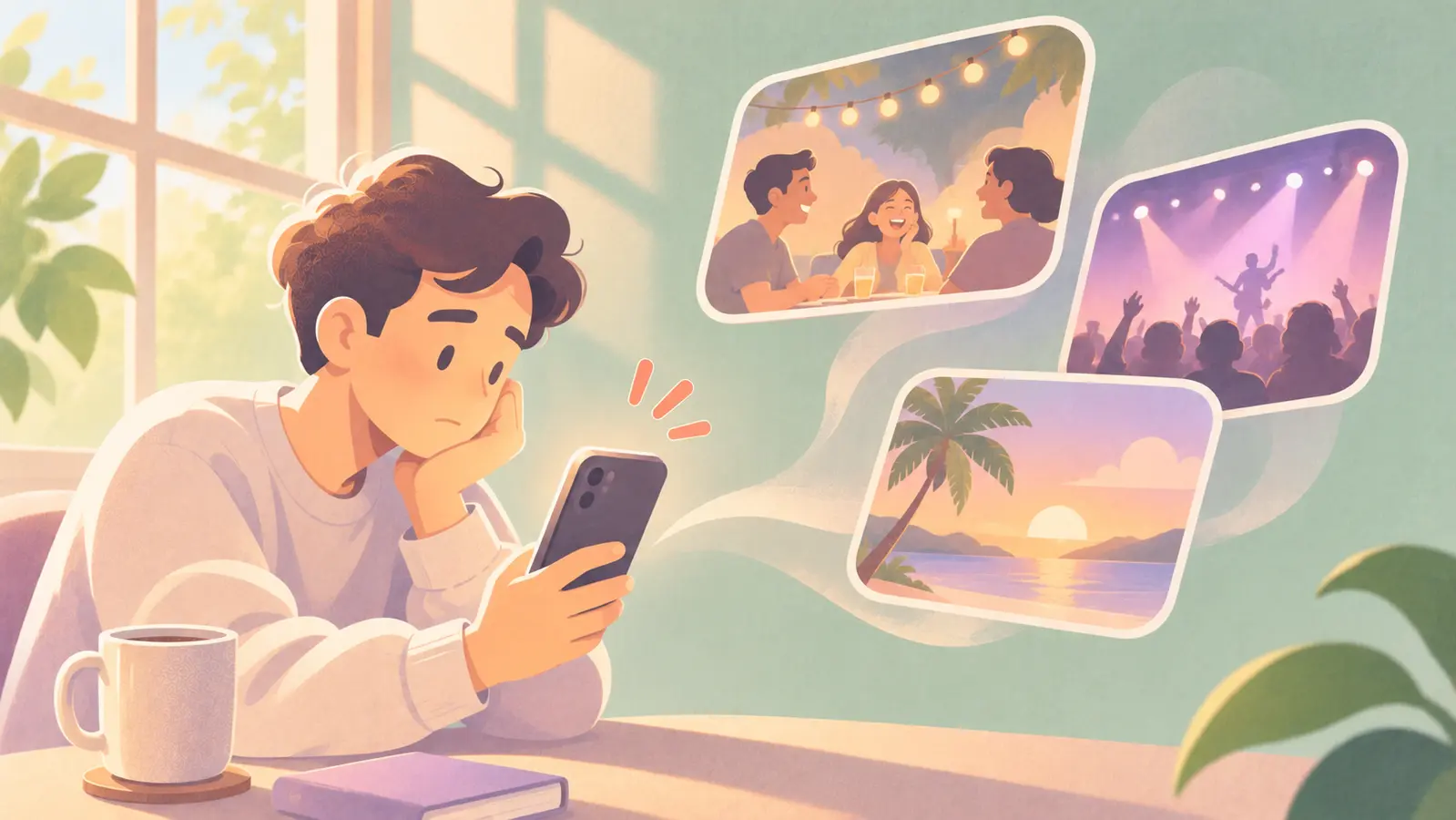
You open Instagram to check one message. A few minutes later, you've seen a friend's weekend plans, a coworker's promotion, a concert you weren't invited to, and a group of people having a great time somewhere without you. Nothing particularly bad has happened, but somehow, you feel like you're missing something.
That feeling has a name: FOMO, or the fear of missing out. It's the uncomfortable sense that other people are enjoying experiences, opportunities, or connections that you're not part of. Social media can make this feeling more difficult to escape because it constantly exposes us to what everyone else is doing, achieving, and experiencing.
The result can be a persistent urge to check, compare, and stay connected, even when scrolling leaves us feeling less satisfied with our own lives. Fortunately, overcoming FOMO doesn't necessarily mean deleting social media. Understanding why it happens and creating healthier boundaries can help you stay connected without feeling obligated to monitor everything.
What Is FOMO?
FOMO stands for fear of missing out. It describes the apprehension that other people might be enjoying rewarding experiences, social interactions, or opportunities without you. You might experience it when friends make plans without you, someone announces an exciting achievement, or a group chat becomes active while you're occupied with something else.
FOMO isn't a new phenomenon. People worried about being excluded long before smartphones existed. What social media has changed is how frequently we're exposed to information about other people's lives. Instead of occasionally hearing about someone's weekend, you can watch it unfold through Instagram Stories. Instead of learning about a colleague's promotion in conversation, you might discover it while scrolling through LinkedIn alongside dozens of other personal and professional milestones.
Researchers generally describe FOMO as involving two related concerns: the feeling that others are enjoying rewarding experiences in your absence and the desire to remain continuously connected with your social network. That second element helps explain why FOMO can encourage repeated phone checking. Looking at your feed may temporarily reassure you that you're not missing anything, but it can also reveal more experiences you weren't part of, creating another reason to keep checking.
Why Does Social Media Make FOMO Worse?
Social media doesn't create our desire for belonging, connection, or recognition. Those are ordinary human motivations. What social platforms do is make information about other people's lives unusually accessible, frequent, and difficult to stop consuming.
One major factor is social comparison. Within a few minutes of scrolling, you might see someone traveling, another person buying a house, and a friend celebrating a relationship milestone. You're comparing an ordinary moment in your own life with the highlights of dozens of other people's lives, often without consciously realizing it. Even when you understand that posts are carefully selected snapshots, repeated exposure can make your everyday experiences feel less exciting by comparison. Our article on social media and self-esteem explores this relationship in greater detail.
Notifications can intensify the feeling by creating a sense that something important is happening whenever you're away. A message, comment, or story notification suggests there's new information waiting for you, even when it doesn't require an immediate response. Over time, the expectation of another update can become a reason to check your phone before you've decided what you're actually looking for.
Social feeds also rarely provide a natural stopping point. You can finish a book, watch the end of a film, or complete a conversation, but there's always another post, story, or recommendation waiting on Instagram or TikTok. This can create a frustrating cycle where you check social media to feel more connected, only to discover additional things you could be missing.
How FOMO Can Affect Your Behavior
FOMO can influence more than how you feel about other people's experiences. It can change how frequently you check your phone, how you spend your free time, and how much attention you give to what's happening around you.
One common example is constantly checking social media without a specific reason. You might open Instagram while waiting for coffee, look through a few stories, put your phone away, and repeat the process ten minutes later. Sometimes the urge comes from boredom or curiosity, but other times it reflects a concern that something important might be happening while you're offline.
FOMO can also make it difficult to enjoy the present. Imagine having dinner with friends while repeatedly checking what other people are posting, or watching a film while wondering whether there's something more interesting happening elsewhere. You may even find yourself attending events you don't particularly want to attend simply because you're worried about missing out. Instead of making decisions based on what you enjoy, you begin making them around the possibility of regret.
These experiences don't automatically mean you have an anxiety disorder or a social media addiction. But when the desire to stay informed starts interfering with your attention, relationships, or enjoyment of everyday activities, it's worth reconsidering the role social media is playing in your life.
How LightScroll Can Help Reduce FOMO
Understanding FOMO is useful, but awareness alone doesn't always change a habit. You might recognize that constantly checking Instagram leaves you feeling distracted and still find yourself opening it throughout the day.
That's part of why we created LightScroll. Rather than requiring you to delete social media altogether, LightScroll helps you establish personalized boundaries around distracting apps and websites on supported Apple devices.
With Controls, you can decide which apps you want to manage, when restrictions apply, and how much time you're willing to spend using them. For example, you might restrict Instagram and TikTok during your workday while allowing yourself a short period to catch up in the evening. This helps separate intentional social connection from the habit of repeatedly checking throughout the day.
LightScroll also offers Frictions, which introduce a pause or short activity before permitted access. That small interruption gives you a moment to consider whether you're opening an app because you genuinely want to use it or because you're uncomfortable with the possibility of missing something.
For stronger boundaries, LightScroll Plus includes Hardcore Mode, which makes selected Controls harder to edit or remove. You can also configure Overrides that involve waiting or requesting a six-digit code from an accountability partner, making additional access a more deliberate decision.
The goal isn't to disconnect from your friends or eliminate the enjoyable parts of social media. It's to make sure that the fear of missing out isn't determining how often you reach for your phone. You can learn more about how LightScroll works.
What Does Research Say About FOMO?
Researchers have found meaningful relationships between FOMO, internet use, and psychological well-being, although the evidence doesn't support the idea that social media inevitably causes anxiety or affects everyone in the same way.
A 2021 systematic review and meta-analysis published in the Journal of Behavioral Addictions examined 86 effect sizes representing 55,134 participants. The researchers identified a positive association between FOMO and internet use, with an average correlation of approximately 0.41. However, the strength of that relationship varied considerably between studies, and the findings don't establish that internet use directly causes FOMO.
A 2023 study published in Cyberpsychology, Behavior, and Social Networking explored whether the relationship might work in both directions. Across two experiments, researchers found evidence that inducing FOMO increased reported social media use, while experimentally increasing social media use also increased feelings of FOMO. This suggests a possible feedback loop in which worrying about missing out encourages checking, while checking exposes people to more experiences that can reinforce that worry.
Still, the broader research picture remains complicated. A 2024 scoping review of 106 articles, published in PLOS ONE, emphasized that findings about FOMO, digital technology, and psychological well-being remain fragmented. Researchers continue to investigate how these relationships develop, which people are most affected, and whether particular forms of social media use have different consequences.
The takeaway is that FOMO is a meaningful psychological experience associated with digital engagement, but its causes and effects are not identical for everyone. Social media can intensify the feeling, yet how we use these platforms and what we experience offline also matter.
How to Overcome FOMO Without Quitting Social Media
You don't need to abandon social media to reduce the fear of missing out. For many people, changing how and when they engage with these platforms is a more realistic approach than disconnecting completely.
A useful place to start is by noticing why you're checking. Before opening Instagram or TikTok, ask yourself whether you're looking for a particular message, catching up with someone, or simply wondering what everyone else is doing. You don't need to question every interaction, but becoming more aware of automatic checking can help you distinguish intentional use from habit.
Reducing unnecessary notifications can also make a difference. Most likes, suggested posts, and comments don't require your immediate attention, yet each alert creates another opportunity to open an app. Consider keeping important messages from people close to you while silencing activity that doesn't need an immediate response. You might also choose specific times to check your feeds rather than monitoring them throughout the day. Our guide to blocking social media apps at certain times explains how to establish these boundaries.
It's also worth reconsidering what appears in your feeds. If certain accounts consistently leave you comparing your life with someone else's, consider muting or unfollowing them. Social media can provide genuine community, entertainment, and inspiration, but you don't need to follow people or consume content that makes you feel inadequate.
Perhaps most importantly, practice enjoying experiences without constantly measuring them against what other people are doing. Spend time with friends, pursue a hobby, go for a walk, or enjoy an activity without feeling obligated to document it. Building a satisfying offline life isn't about making every moment exciting. It's about becoming more comfortable with the experiences you've chosen, even when other people are doing something different.
You might also experiment with a temporary social media break. Spending a weekend or a few days away from your usual feeds can help you recognize which parts of social media you genuinely value and which have become automatic habits. You may discover that you miss meaningful conversations but don't particularly miss endless scrolling, which can help you establish more intentional boundaries afterward.
Ultimately, overcoming FOMO isn't about making your life more interesting than everyone else's. It's about recognizing that you don't need to participate in every conversation, attend every event, or follow every update to have a fulfilling life.
Learning to Enjoy What You're Not Missing
FOMO is a natural response to the desire for connection, belonging, and rewarding experiences. Social media can intensify it by making other people's activities constantly visible and giving us seemingly unlimited opportunities to compare, check, and wonder what we're missing.
But staying informed doesn't require staying connected every minute. By reducing unnecessary notifications, creating intentional browsing habits, and establishing boundaries around distracting apps, you can enjoy the benefits of social media without feeling obligated to monitor everything happening online.
Some of the most meaningful experiences are the ones happening right in front of you, away from the endless stream of other people's highlights. You can stay connected without being constantly available, and you can enjoy your own life without needing to keep track of everyone else's.
Sources and Further Reading
- Fear of Missing Out and Internet Use — Systematic Review and Meta-Analysis (2021), Journal of Behavioral Addictions.
- The Dual Nature of Social Media — FOMO and Social Media Use (2023), Cyberpsychology, Behavior, and Social Networking.
- FOMO, Digital Technology Use, and Psychological Well-Being — Scoping Review (2024), PLOS ONE.