
Digital Burnout and the Signs You're Overwhelmed by Technology
Derek C.
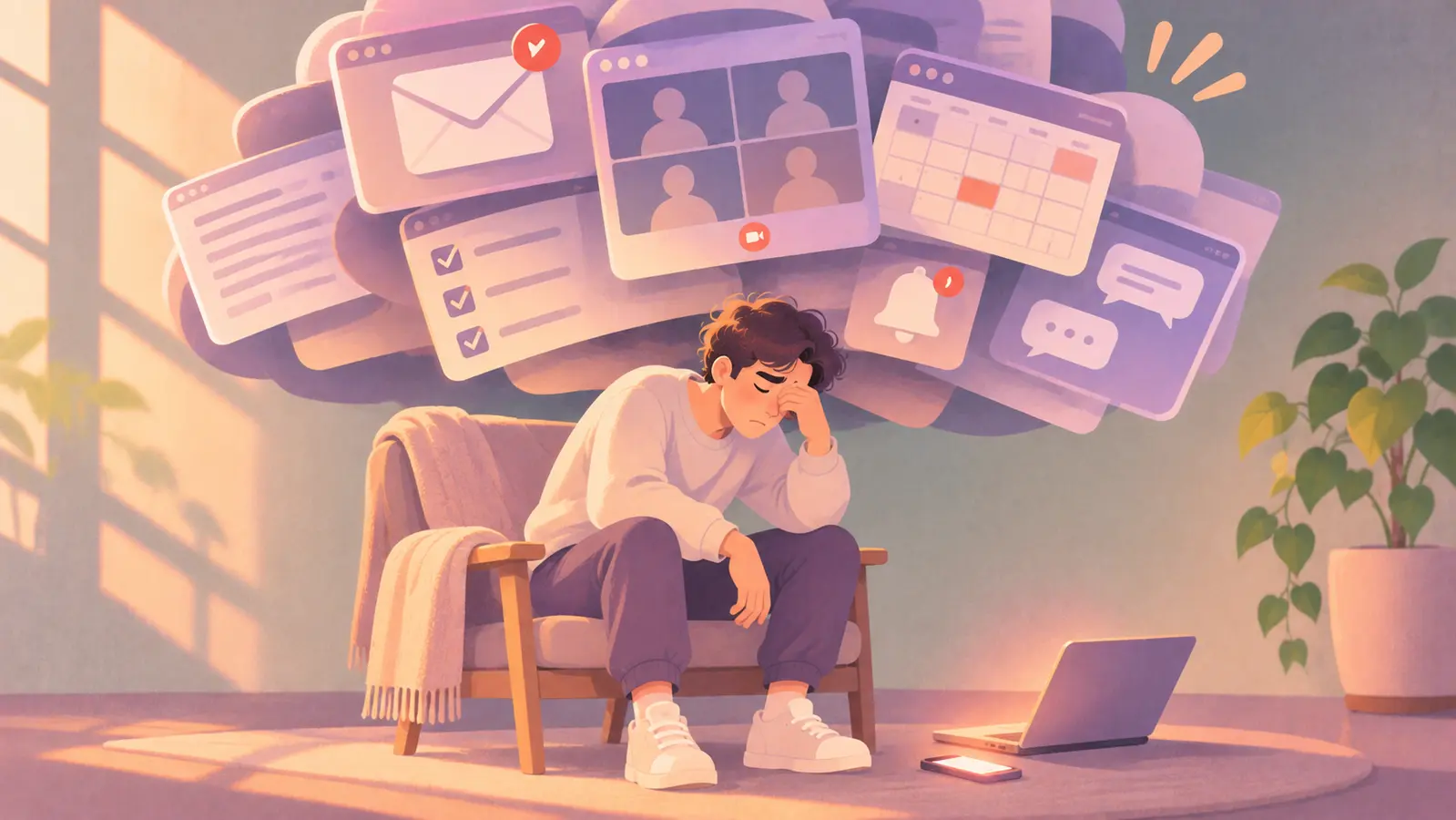
Feeling exhausted by screens, notifications and constant connectivity? Learn what digital fatigue and technostress mean, common warning signs and practical ways to create healthier boundaries.
You finish a long day of work and close your laptop, but you're not really finished with screens. Your phone is waiting with messages, social media updates, news alerts, and reminders. You check one thing, answer another, and eventually find yourself scrolling through more content, even though you're already tired.
After a while, it can start to feel like you're never truly disconnected. Your working hours involve screens, your social life involves screens, and even your downtime often means switching to another device.
People commonly describe this experience as digital burnout. It's the feeling of being mentally exhausted or overwhelmed by constant connectivity, information, and digital demands. Although digital burnout isn't a formal medical diagnosis, it describes a familiar problem in a world where technology makes it increasingly difficult to switch off.
Understanding the signs of digital burnout, the different kinds of digital fatigue, and how to create healthier boundaries can help you make technology feel less demanding without abandoning the tools you rely on.
What Is Digital Burnout?
Digital burnout is an informal term for feeling mentally or emotionally exhausted by sustained digital activity and constant connectivity. It can develop when screens, notifications, online communication, and digital responsibilities consume so much attention that you struggle to properly disengage.
You might experience it after a workday filled with video meetings and emails, an evening spent responding to messages, or a weekend where you never quite stop checking news and social media. Individually, these activities might be manageable. Together, they can create the feeling that your attention is constantly being requested.
The term overlaps with several related concepts. Digital fatigue refers broadly to tiredness or mental strain associated with demanding digital activity, while technostress describes stress connected to using or adapting to technology. Information overload occurs when the amount of information competing for your attention becomes difficult to process, and videoconference fatigue describes the exhaustion some people experience during extended online meetings.
These experiences can overlap, but they're not identical. Someone overwhelmed by work messages may need clearer professional boundaries, while someone exhausted by evening scrolling might benefit from changing their personal phone habits. Understanding what's actually draining you is more useful than assuming every screen is equally responsible.
Is Digital Burnout a Real Medical Condition?
Digital burnout isn't a standardized standalone medical diagnosis. It's also important to distinguish it from the World Health Organization's formal definition of burnout.
According to the World Health Organization, burnout is classified in ICD-11 as an occupational phenomenon resulting from chronic workplace stress that hasn't been successfully managed. It involves exhaustion, increased mental distance or negative feelings toward work, and reduced professional effectiveness.
That definition specifically concerns the workplace. Feeling tired after using your phone or spending a day in video meetings doesn't automatically mean you have occupational burnout, although demanding technology use can contribute to work-related stress.
7 Signs You May Be Experiencing Digital Burnout
Digital burnout can look different depending on your work, responsibilities, and technology habits. There isn't a diagnostic checklist, but several experiences may suggest that your digital life is becoming more demanding than you'd like.
One of the most common signs is feeling mentally drained after being online. You might finish a day of emails, meetings, and messaging with little energy left for reading, spending time with friends, or other activities you normally enjoy. Even when you want to relax, you may find that your attention feels exhausted.
Another sign is difficulty concentrating. Constantly moving between tabs, applications, conversations, and tasks can make it harder to maintain focus. You might reread the same email several times or struggle to return to an important task after being interrupted. Our article on the problem with multitasking explores why frequent task switching can make focused work more difficult.
Notifications can become particularly overwhelming. When messages arrive throughout the day and continue into the evening, you may start to feel as though you're always responding to something rather than deciding what deserves your attention. Even notifications that aren't urgent can create the impression that there's always something you should be checking.
You might also feel pressure to remain constantly available, particularly when work communication follows you into personal time. Checking email after dinner or responding to messages on weekends can make it difficult to establish a clear boundary between working and resting.
Other signs include losing interest in screen-based activities that once felt enjoyable, continuing to scroll despite already feeling exhausted, and struggling to spend meaningful time away from your devices. You might close your laptop after work only to spend the next few hours browsing social media or watching videos, leaving you with the feeling that you've never properly switched off.
These experiences don't automatically indicate a medical condition. However, if persistent fatigue, difficulty concentrating, or emotional distress is significantly affecting your life, consider speaking with a qualified health professional. Digital habits may be one contributing factor, but they aren't the only possible explanation.
How LightScroll Can Help Reduce Digital Burnout
Sometimes the most exhausting part of digital life isn't the technology you need for work or communication. It's the collection of distracting apps and websites that continue demanding your attention long after you've finished what you intended to do.
That's part of why we created LightScroll. Rather than encouraging you to avoid every screen, LightScroll helps you establish more intentional boundaries around selected apps and websites on supported Apple devices.
With Controls, you can decide which apps to manage, when restrictions should apply, and how much time you want to allow. For example, you might restrict social media during working hours, limit entertainment apps in the evening, or make certain distractions unavailable before bed. This helps create a clearer separation between the technology you're using intentionally and the habits that tend to pull you back into another browsing session.
LightScroll also offers Frictions, which introduce a pause or short activity before permitted access. That interruption can help you recognize when you're opening an app automatically, perhaps because you're tired, bored, or looking for a momentary distraction.
You can also use Focus Sessions to create dedicated periods for concentration. For people who struggle to maintain their own restrictions, LightScroll Plus includes Hardcore Mode, which makes selected Controls harder to edit or delete. Configurable Overrides can introduce waiting periods or require a six-digit unlock code from an accountability partner.
LightScroll isn't a treatment for burnout, and an app blocker can't resolve unrealistic workloads or workplace expectations. It can, however, help reduce some of the avoidable digital interruptions that compete for your attention throughout the day.
The goal isn't to make technology less useful. It's to create more room for focused work, genuine rest, and experiences that don't require another screen. Learn more about how LightScroll works.
What Causes Digital Burnout?
Digital burnout rarely comes from one source. More often, it reflects a combination of constant connectivity, information overload, demanding work routines, and personal habits that leave little separation between digital activities.
One major contributor is the expectation of always being available. Smartphones and laptops allow us to communicate from almost anywhere, which is incredibly convenient, but can also make it harder to disconnect from work or social obligations. When messages follow us into evenings and weekends, even personal time can begin to feel like an extension of the working day.
Information overload creates another kind of pressure. Emails, documents, group chats, social media posts, news updates, and notifications all compete for a limited amount of attention. No individual message needs to be particularly demanding for the combined volume to become exhausting.
Virtual meetings can add their own challenges. Unlike many in-person interactions, video calls may require sustained attention to a screen, deliberate interpretation of social cues, and awareness of how you're presenting yourself. When meetings happen back to back, there may be little opportunity to process information or recover before the next conversation.
The boundary between work and leisure can become blurred as well. You might use the same laptop for professional tasks and entertainment, or the same phone for work messages, personal conversations, and social media. Even when you've technically finished working, the device continues offering new reasons to engage with it.
Finally, not all digital fatigue comes from professional demands. Spending your free time automatically checking social media, watching short-form videos, or moving between apps can add another stream of information to an already demanding day.
Our guide to digital overload examines how constant information and connectivity can become overwhelming, even when individual digital activities seem manageable.
What Does Research Say About Digital Fatigue and Technostress?
Although digital burnout isn't one universally defined condition, researchers have studied several experiences that help explain why technology can contribute to mental exhaustion.
A 2024 systematic literature review published in Computers in Human Behavior Reports examined technostress and its psychological, emotional, physical, and work-life implications. The researchers highlighted several ways technology can create strain, including excessive information, pressure to remain connected, technological complexity, and the demands of adapting to changing systems.
The review also noted inconsistencies across the research, reinforcing the importance of understanding which specific technology-related demands are causing difficulties rather than treating all digital activity as one problem.
A separate 2024 study published in SAGE Open surveyed 142 workers about information overload, stress, anxiety, exhaustion, and the fear of missing important work-related information. The researchers found that information overload and concerns about missing updates were associated with greater exhaustion.
This highlights an interesting aspect of modern digital work: sometimes the pressure comes not just from the volume of information, but from the feeling that you need to keep monitoring it in case something important happens.
Researchers have also investigated videoconference fatigue, often called Zoom fatigue. A 2025 meta-analysis published in Computers in Human Behavior Reports examined 56 potential predictors of videoconference fatigue across 38 quantitative studies. Psychological factors emerged as particularly important, suggesting that meeting fatigue involves more than simply looking at a screen for an extended period.
Similarly, a 2025 critical review of 147 papers published in the Journal of Strategic Information Systems explored different forms of work involved in virtual meetings, including interpreting communication, managing self-presentation, and adapting to the technology itself.
Together, these findings suggest that digital exhaustion is often connected to the demands surrounding technology rather than screen exposure alone. That distinction matters because reducing unnecessary interruptions, changing work expectations, and making digital communication more manageable may be more useful than simply trying to achieve the lowest possible screen-time number.
How to Prevent Digital Burnout and Reduce Digital Fatigue
You probably can't avoid technology entirely, and you may not want to. Digital tools are essential for work, communication, learning, and entertainment. The goal is to make your relationship with those tools more sustainable by reducing unnecessary demands and creating more opportunities to disengage.
A useful starting point is reducing the number of notifications competing for your attention. Review which apps and services can interrupt you, then consider disabling alerts for social media reactions, promotional messages, suggested posts, and other updates that don't require an immediate response. Keep the communications you genuinely need while reducing the steady stream of interruptions throughout the day.
Creating a clear end to your working day is equally important. If your role allows, decide when you're finished checking work email and messages, and communicate reasonable expectations around response times. You might disable work notifications outside business hours, use separate browser profiles, or avoid keeping professional messaging apps open during personal time. Our article on the right to disconnect explores why these boundaries matter and how constant availability can affect work-life balance.
It's also worth reconsidering what counts as a break. If you spend eight hours working on a laptop and then use every short break to scroll through your phone, you're technically stepping away from work but continuing to consume digital information. Try taking some breaks away from screens entirely, whether that means walking, stretching, getting outside, or enjoying lunch without your devices nearby.
If your schedule involves frequent video meetings, consider leaving a little space between calls where possible. Use that time to stand up, process notes, or prepare for your next task rather than immediately opening another screen. You might also question whether every conversation requires a video meeting or whether an email, phone call, or asynchronous update would be sufficient.
Simplifying your information environment can make digital life feel less demanding. You don't need to follow every news source, participate in every group chat, or subscribe to every newsletter. Muting noisy conversations, unsubscribing from updates you rarely read, and reducing unnecessary browser tabs can make it easier to focus on the information that actually matters.
Protecting focused work is another useful strategy. Instead of constantly switching between meetings, messages, and important tasks, consider grouping similar activities together and reserving periods for work that requires sustained attention. Our guide to staying focused at work offers practical ways to structure your day and manage digital distractions.
Beyond work, consider creating a few predictable screen-free periods. You might avoid scrolling during meals, keep your phone away while exercising, or spend part of your evening reading instead of browsing. You don't have to turn every offline moment into another productivity goal. Sometimes the benefit comes simply from having time when nothing is demanding your attention.
Our guide to digital minimalism offers a broader framework for deciding which technologies genuinely add value to your life and which ones you might be better off using less frequently.
Finally, remember that mental fatigue and physical screen discomfort aren't the same thing. If prolonged screen use leaves your eyes feeling dry, irritated, or tired, you may benefit from adjusting your workspace, reducing glare, and taking regular visual breaks. Our article on digital eye strain explores these symptoms and practical ways to reduce them.
When to Seek Help for Digital Burnout
If you're consistently exhausted, struggling to concentrate, or finding it difficult to manage your responsibilities, don't automatically assume that too much screen time is the only explanation.
Persistent fatigue can have many causes, including workplace stress, sleep difficulties, physical health concerns, and mental health conditions. A qualified health professional can help you understand what may be contributing to your symptoms and whether additional support is appropriate.
If your exhaustion appears closely connected to work, it may also be worth discussing workloads, communication expectations, and opportunities for recovery with your employer where appropriate. Personal screen-time limits can help with distractions, but they can't replace meaningful changes to an unsustainable working environment.
Creating More Room for Life Beyond the Screen
Digital burnout is a common way of describing the exhaustion that can come from constant connectivity and overwhelming digital demands. It overlaps with technostress, information overload, and digital fatigue, although these experiences aren't identical and shouldn't automatically be confused with occupational burnout.
The most useful response isn't necessarily to abandon technology. It's to recognize which parts of your digital life are creating the most strain and change those first.
Reducing unnecessary notifications, establishing clearer work boundaries, taking breaks away from screens, and making time for offline experiences can all help create a more sustainable relationship with technology.
You don't need to be constantly available, consume every update, or fill every quiet moment with another app. Technology should make your life easier, not leave you feeling as though you're never allowed to switch off.
Sometimes the most meaningful way to recharge is to step away from the screen and make room for everything happening beyond it.
Frequently Asked Questions
What are the signs of digital burnout?
Common experiences include mental exhaustion after digital activity, difficulty concentrating, feeling overwhelmed by notifications, pressure to remain constantly available, reduced enjoyment of screen-based activities, and difficulty switching off. These signs aren't a medical diagnosis.
Is digital burnout the same as occupational burnout?
No. Digital burnout is an informal term describing exhaustion associated with digital demands. The WHO defines occupational burnout specifically in relation to chronic workplace stress that hasn't been successfully managed.
How do you recover from digital burnout?
Start by identifying which digital activities are creating the most strain. Reducing unnecessary notifications, setting clearer boundaries around work communication, taking breaks away from screens, and making time for offline activities may help. Persistent or significant symptoms deserve professional evaluation.
Can an app blocker help with digital burnout?
An app blocker can help manage distracting apps and websites, reduce automatic checking, and create more intentional boundaries around screen use. Tools such as LightScroll can support healthier digital habits, although they aren't treatments for burnout.
Sources and Further Reading
- World Health Organization — Burn-out an Occupational Phenomenon
- Technostress — A Comprehensive Literature Review on Dimensions, Impacts, and Management Strategies (2024), Computers in Human Behavior Reports.
- Overloaded by Information or Worried About Missing Out on It (2024), SAGE Open.
- Zoom Fatigue in Review — A Meta-Analytical Examination (2025), Computers in Human Behavior Reports.
- A Labour Perspective on Videoconferencing Fatigue (2025), Journal of Strategic Information Systems.