
Why We Crave Likes and Validation on Social Media
Juan F.
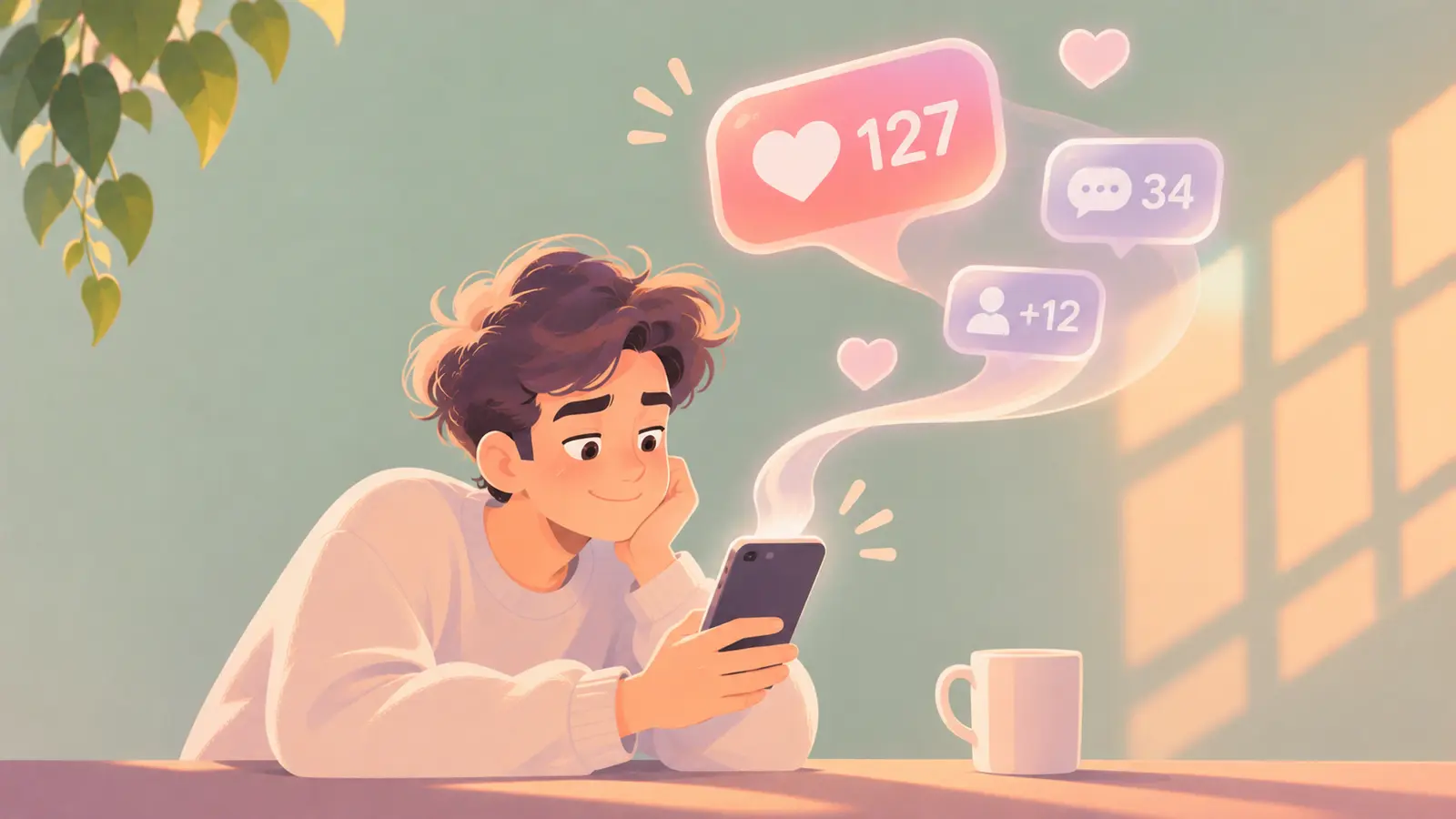
Why do likes and comments feel so rewarding? Explore the psychology of social media validation, how feedback shapes behavior and how to build a healthier relationship with online approval.
You post a photo on Instagram. Maybe it's from a weekend with friends, somewhere you traveled, or simply a moment that made you happy. You put your phone down, return to whatever you were doing, and a few minutes later, find yourself checking whether anyone has liked it. Before long, you're checking again, even though you know there probably hasn't been much activity since the last time you looked.
It's strange how something so small can affect us. A few encouraging comments can make us smile, while a post that receives little attention can leave us feeling unexpectedly disappointed. We might tell ourselves that likes don't matter, and intellectually, we know they shouldn't. Yet sometimes, they still do.
There's something deeply human beneath our desire for social media validation. We want to be noticed, appreciated, and understood. Those desires existed long before smartphones, but social media has introduced an unusual way of satisfying them: turning approval into numbers we can watch, compare, and sometimes begin to measure ourselves against.
Understanding why we crave likes isn't about criticizing ourselves for wanting attention. It's about recognizing a natural human need and learning how to keep it from having more influence over our happiness than it deserves.
What Is Social Media Validation?
Social media validation is the sense of approval, recognition, or reassurance we receive through interactions on social platforms. It might come from someone liking a photograph, leaving a thoughtful comment, sharing something we've created, or following our account because they're interested in what we have to say.
At its heart, validation is about wanting to feel that we matter to other people. When a friend compliments us or someone appreciates our work, that recognition can leave us feeling connected and understood. Social media offers another way to experience those feelings, but with one important difference: online approval is unusually visible and measurable.
We can see exactly how many people interacted with something we've shared, compare one post with another, and watch the numbers change throughout the day. This can subtly influence how we interpret our experiences. A photograph from a wonderful afternoon might feel less special when it receives fewer likes than expected, even though nothing about the memory itself has changed.
The difficulty begins when we allow those unpredictable numbers to influence how we feel about ourselves. Enjoying recognition is natural, but depending on it for reassurance can leave us constantly looking for the next response.
Why Do Likes on Social Media Feel So Good?
The desire for approval is closely connected to our need for belonging. Most people care about being accepted by others, whether through friendships, family, romantic relationships, or the communities they're part of. When someone responds positively to something we've shared, it can provide a small feeling of connection. Someone noticed us, appreciated what we posted, or acknowledged something that mattered to us.
But social media doesn't simply provide opportunities for connection. It makes those interactions measurable, and that can change how we experience them. A thoughtful compliment from a friend might stay with us for days, while a photograph receiving twenty likes instead of fifty can leave us wondering why more people didn't respond.
Engagement depends on many factors beyond the person who created a post. Audience size, timing, platform recommendations, and whether people happened to see the content all influence the response. A meaningful post might reach very few people, while an ordinary video could unexpectedly attract thousands of views. Yet when those numbers appear beside our own photographs or accomplishments, it's easy to interpret them as personal judgments.
There's also the uncertainty of waiting for feedback. When you share something online, you don't know who will see it or when reactions might arrive. You might check shortly after posting, then return because you're curious whether anything has changed. Over time, that repeated checking can become automatic.
Researchers discuss these behaviors in relation to reward processing, social expectations, and reinforcement, although our motivation is more complicated than the popular idea that likes simply provide a dopamine hit. What makes social media unusual isn't that it invented our desire to feel appreciated. It's that it allows us to check whether we're being appreciated almost whenever we want.
When Online Approval Starts Affecting Our Self-Worth
There's nothing wrong with enjoying likes, comments, or positive attention. The difficulty arises when online approval begins influencing our mood, decisions, or sense of self-worth more than we'd like.
Sometimes this happens gradually. You might check your posts more frequently, feel disappointed when they receive less engagement than expected, or compare your follower count with people you know. Perhaps you begin choosing photographs based on which ones are most likely to perform well rather than which ones best capture a memory.
Over time, sharing can become less about expressing yourself and more about anticipating how you'll be perceived. Instead of enjoying an evening with friends, part of your attention might shift toward capturing something worth posting. Instead of feeling proud of an accomplishment, you might wonder whether other people will find it impressive.
Social comparison can make this particularly difficult. When you scroll through Instagram or TikTok, you're often seeing carefully selected moments from other people's lives, accompanied by visible signs of how much attention they're receiving. It's easy to assume someone else's life must be more interesting or fulfilling than your own, even though a popular photograph tells you very little about how happy or connected that person actually feels.
Our article on social media comparison explores how these experiences can influence the way we see ourselves.
Perhaps the most useful question isn't whether you care about likes, but whether the possibility of receiving them is changing how you live. If you're repeatedly checking for reassurance or finding it difficult to enjoy experiences without sharing them, it may be worth creating some distance between your happiness and other people's reactions.
How LightScroll Can Help You Stop Constantly Checking for Likes
Understanding a habit doesn't necessarily make it easier to change. You might recognize that refreshing Instagram every few minutes isn't making you happier and still find yourself opening it whenever you have a quiet moment.
That's part of why we created LightScroll. We believe technology should help people stay connected without constantly competing for their attention. You shouldn't have to give up sharing photographs, keeping up with friends, or participating in communities you enjoy simply because certain apps have become difficult to put down.
LightScroll helps you create personalized boundaries around distracting apps and websites on supported Apple devices. With Controls, you can choose when social media is available and how much time you want to spend using it. You might decide to check Instagram during lunch or in the evening rather than repeatedly opening it throughout your workday.
LightScroll also offers Frictions, which introduce a pause or short activity before permitted access. If checking your likes has become an automatic response to boredom or curiosity, that moment gives you an opportunity to consider whether you're opening the app to connect with someone or simply hoping for another reaction.
For stronger boundaries, LightScroll Plus includes Hardcore Mode, which makes selected Controls harder to edit or delete. You can also configure Overrides involving waiting periods or an accountability partner's six-digit unlock code.
Of course, an app can't eliminate our natural desire for approval, and that isn't the goal. LightScroll exists to help make room for life beyond the screen, including the experiences and relationships that matter whether or not anyone else sees them.
Learn more about LightScroll and how it can help you build healthier social media habits.
What Does Psychology Say About Likes and Social Validation?
Research suggests that visible social approval can influence how people respond to online content, particularly when they can see how much engagement something has already received.
A 2016 study by Lauren Sherman and colleagues, published in Psychological Science, examined how adolescents responded to photographs in an Instagram-like environment. Participants were shown images displaying different numbers of likes while researchers observed their behavior and brain activity.
The study found that adolescents were more likely to like photographs that appeared popular. Images with greater social endorsement were also associated with increased activity in brain regions involved in reward processing and social cognition. These findings suggest that visible approval can influence our responses, although they don't establish that likes are addictive or that everyone experiences social feedback in the same way.
An earlier 2012 review by Ashwini Nadkarni and Stefan Hofmann, published in Personality and Individual Differences, identified the need to belong and the need for self-presentation as important motivations behind Facebook use.
This distinction matters because seeking validation isn't necessarily about vanity. Often, it's connected to ordinary feelings of wanting to be accepted, understood, and appreciated. Social platforms offer new opportunities to meet those needs, but they can also make us unusually conscious of whether other people appear to approve of us.
How to Build a Healthier Relationship With Online Approval
Developing a healthier relationship with social media validation doesn't mean convincing yourself that other people's opinions are irrelevant. Most of us will always care what the people around us think. The aim is to appreciate recognition without depending on it to feel good about ourselves.
A useful place to begin is remembering why you wanted to share something. Maybe you posted a photograph because you had a wonderful day or shared an achievement because you were proud of your progress. Those reasons existed before anyone responded, and the experience doesn't become less meaningful because it received fewer likes than expected.
It can also help to stop monitoring engagement in real time. If you tend to check repeatedly after posting, try leaving the app alone for a while. You can still return later to read thoughtful comments and respond to friends without organizing your attention around waiting for reactions.
Pay attention to how your feed makes you feel, too. Some accounts introduce us to inspiring ideas and communities we genuinely enjoy. Others leave us feeling as though we're constantly falling behind. Being selective about who you follow can help reduce comparisons that don't make your life better.
Perhaps the most meaningful change is making room for experiences that don't need an audience. Spend an afternoon somewhere beautiful without feeling obligated to photograph it. Enjoy a meal with someone you love without worrying about documenting it. Work toward something you're proud of without immediately considering how you might announce it online.
These moments don't need to be impressive or photogenic to mean something. You can still enjoy sharing your life, but the experience itself should matter more than how many people respond to it.
Finding Confidence Beyond the Numbers
Most of us want to feel seen. We want to know that people appreciate us, that our experiences matter, and that we belong somewhere. Those desires don't disappear when we put down our phones, and there's no reason to feel ashamed of them.
But social media has made it easy to confuse being noticed with being valued. A photograph can receive a thousand likes and still leave someone feeling lonely. An ordinary afternoon with someone you love might receive no attention at all and become a memory you treasure for years.
Much of what makes life meaningful happens privately: the conversations that stay with us, the friendships that deepen over time, and the small accomplishments we're quietly proud of. These experiences don't appear in an engagement report, but that doesn't make them any less real.
You can enjoy receiving compliments and appreciate positive feedback without allowing those reactions to determine how you feel about yourself. Your life is already happening before you share it, and it continues long after everyone has stopped scrolling.
Frequently Asked Questions
Why do I care so much about likes on social media?
Likes provide visible social feedback, which can make us feel noticed, appreciated, and accepted. Those feelings connect to our natural desire for belonging, while social platforms make approval particularly easy to measure and compare.
Is seeking validation on social media unhealthy?
Not necessarily. Enjoying recognition is normal. It may become worth examining when online engagement begins strongly influencing your mood, self-esteem, decisions, or ability to enjoy experiences without sharing them.
How can I stop checking who liked my posts?
Try checking engagement at specific times, turning off nonessential notifications, and creating boundaries around social media access. It can also help to remember why you wanted to share something and recognize that the response doesn't determine how meaningful the experience was.
Sources and Further Reading
- The Power of the Like in Adolescence: Effects of Peer Influence on Neural and Behavioral Responses to Social Media (2016), Psychological Science.
- Why Do People Use Facebook? (2012), Personality and Individual Differences.