
Phone Addiction Symptoms and 7 Signs Your Phone Use Is Becoming a Problem
Derek C.
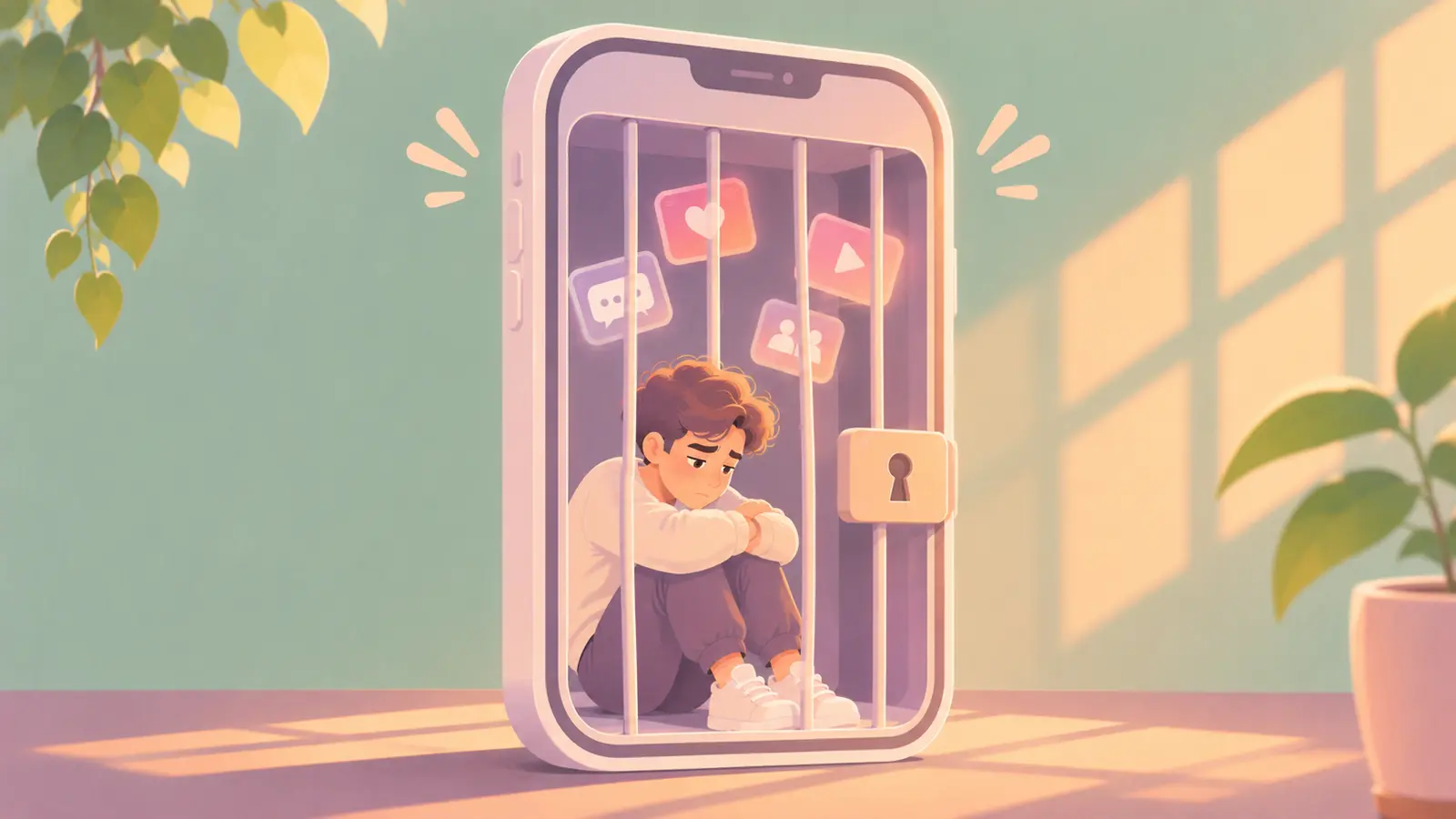
Wondering if you're addicted to your phone? Learn seven signs of problematic phone use, how it can affect daily life and practical ways to regain control.
You reach for your phone while waiting for the kettle to boil. A few minutes later, you check it again while sitting on the couch. Then once more before starting work. By lunchtime, you've probably picked it up dozens of times, often without consciously deciding to.
Most of us don't think much about these small interactions. Smartphones have become such a natural part of everyday life that checking them can feel almost as automatic as glancing at a clock.
But what happens when using your phone starts to feel less like a choice? Perhaps you're spending more time scrolling than you intend, struggling to concentrate without checking notifications, or finding that your phone regularly gets in the way of sleep and relationships.
These experiences are often described as phone addiction symptoms, although researchers generally use the more cautious term problematic smartphone use. Not every frequent phone user has an addiction, and there isn't a universal screen-time limit that separates healthy habits from unhealthy ones.
What matters is whether you feel in control of your phone use and whether it's interfering with the life you want to live.
What Are the Symptoms of Phone Addiction?
Phone addiction symptoms are patterns of smartphone use that may indicate difficulty controlling your habits or continuing to use your device despite unwanted consequences.
The term phone addiction is widely understood, but it isn't currently recognized as a standalone diagnosis in the DSM-5-TR or ICD-11. Researchers instead study problematic smartphone use, which can involve persistent checking, difficulty reducing usage, and interference with everyday responsibilities.
It's important to distinguish between using your phone frequently and feeling unable to control how you use it. Someone might spend several hours on their phone for work, navigation, communication, or creative projects without experiencing significant problems. Another person might have considerably less screen time but feel compelled to check constantly, even when it disrupts activities they care about.
The following seven signs aren't a diagnostic test. They're useful questions to consider when deciding whether your relationship with your phone needs to change.
7 Signs Your Phone Use Is Becoming a Problem
1. You Check Your Phone Without Knowing Why
You unlock your phone, glance at the Home Screen, open Instagram, and scroll for a moment. Then you close the app, put your phone down, and pick it up again shortly afterward. Sometimes you might even forget what you originally wanted to check.
This kind of automatic checking can develop when your phone becomes the default response to boredom, waiting, or any moment without a specific activity. The behavior doesn't necessarily involve a conscious decision to use your device. You simply reach for it because it's available and familiar.
Try noticing how often you pick up your phone because you actually need something, compared with the times you reach for it out of habit. You might be surprised by how many interactions begin without a particular purpose.
2. You Spend Much Longer on Your Phone Than You Intended
You tell yourself you'll watch one video before getting back to work. Twenty minutes later, you're still scrolling. You weren't planning to spend that much time on your phone, but each new piece of content gave you another reason to continue.
Many apps make this especially easy by offering continuous feeds, recommendations, and videos without obvious stopping points. Unlike finishing a book chapter or watching a television episode, scrolling often doesn't provide a clear moment when you're done.
Occasionally losing track of time isn't necessarily concerning. The more meaningful pattern is regularly spending considerably longer on your phone than you intended, particularly when that time displaces sleep, responsibilities, or other activities you value.
3. You Struggle to Put Your Phone Down Even When You Want To
Perhaps you've already decided you've spent enough time scrolling, but you keep telling yourself you'll stop after one more video. Or you've tried setting screen-time limits several times, only to dismiss them when you want another few minutes.
This is an important distinction between enjoying your phone and feeling that your habits are difficult to control. You may genuinely want to spend less time on certain apps, yet find yourself returning to them almost immediately whenever you're bored, tired, or looking for entertainment.
If your intentions and your actual behavior regularly differ, it may be worth creating stronger boundaries rather than relying entirely on remembering to stop.
4. You Feel Restless When Your Phone Isn't Available
Imagine leaving your phone at home while going for a walk. Would you enjoy the time away, or spend much of it wondering whether someone has messaged you?
Some people feel uncomfortable when their phone is charging in another room, the battery runs out, or they're unable to check notifications for an extended period. They might worry about missing an important update, a social interaction, or something happening elsewhere.
This can overlap with nomophobia, a term describing anxiety or distress associated with being without access to a mobile phone.
Of course, there are practical reasons to want your phone nearby, including safety, navigation, or important communication. Feeling concerned about genuinely needing your device isn't the same as experiencing persistent anxiety about being disconnected. The question is whether the discomfort seems disproportionate to the situation.
5. Your Phone Regularly Interrupts Sleep or Relationships
You intend to go to bed at a reasonable hour, but a few minutes of scrolling becomes another half hour. At dinner, you check messages while someone is speaking. During time with friends or family, you repeatedly glance at your phone even though nothing urgent is happening.
These moments might seem insignificant individually, but their impact can accumulate. Phone use becomes more concerning when it repeatedly takes time or attention away from activities that matter to you.
You don't need to maintain perfect screen-free habits to have a healthy relationship with technology. But if scrolling regularly delays your sleep, interrupts meaningful conversations, or makes it difficult to be present with other people, it's worth considering whether your habits are aligned with your priorities.
6. You Find It Difficult to Concentrate Without Checking
You sit down to read, study, or work on something important, but part of your attention keeps returning to your phone. Perhaps you're wondering whether a message has arrived or feeling tempted to open an app even though you're trying to focus.
Sometimes an actual notification interrupts you. Other times, the urge to check appears without any alert at all. Either way, repeatedly switching between your task and your phone can make sustained attention more difficult.
This doesn't mean every concentration problem is caused by smartphone use. Work demands, sleep, stress, and other factors all influence attention. However, if checking your phone is repeatedly interrupting activities that require focus, creating periods of uninterrupted time may be helpful.
Our article on the hidden cost of push notifications explores how frequent alerts can compete for your attention throughout the day.
7. You Continue Using Your Phone Despite Negative Consequences
Perhaps the most meaningful warning sign is recognizing that your phone habits are causing problems while repeatedly struggling to change them.
You might know that late-night scrolling is affecting your sleep, that social media is distracting you from important work, or that constant checking is frustrating someone close to you. Yet when the familiar urge appears, you find yourself returning to the same behavior.
The concern isn't that you occasionally spend too much time on your phone. It's the persistent gap between how you want to use your device and how you're actually using it, particularly when that gap has consequences for your well-being or responsibilities.
If several of these experiences feel familiar and are causing meaningful distress or disruption, consider speaking with a qualified health professional. These signs can help you reflect on your habits, but they cannot establish a diagnosis.
How LightScroll Can Help You Regain Control
Recognizing the signs of excessive phone use is a useful starting point. But knowing you want to change a habit doesn't necessarily make following through easy, especially when distracting apps are available with a single tap.
That's part of why we created LightScroll. Rather than encouraging you to give up your smartphone, LightScroll helps you establish personalized boundaries around selected apps and websites on supported Apple devices.
With Controls, you can decide which apps to manage, when restrictions apply, and how much time you want to allow. For example, you might restrict social media during working hours, create a daily allowance for entertainment apps, or make distracting platforms unavailable during your evening routine.
LightScroll also offers Frictions, which introduce a pause or short activity before permitted access. If you frequently open Instagram without thinking, that moment can help you recognize the impulse and decide whether you actually want to continue.
For stronger commitment, LightScroll Plus includes Hardcore Mode, which makes selected Controls harder to edit or delete. You can also configure Overrides that involve waiting or requesting a six-digit unlock code from an accountability partner, making additional access a more deliberate decision.
These features aren't treatments for addiction, and they can't address every underlying reason someone struggles with phone use. But they can help you create practical boundaries around the specific activities that repeatedly distract you.
The goal isn't to stop using your phone. It's to make sure you're choosing when and why you use it. Learn more about how LightScroll works.
Is Phone Addiction a Real Medical Condition?
Phone addiction is a familiar phrase, but whether problematic smartphone use should be classified as a distinct behavioral addiction remains an active area of scientific debate.
One challenge is that smartphones provide access to many different activities. Someone might struggle with compulsive social media checking, gaming, shopping, or another behavior that happens to take place on their phone. Researchers continue to investigate whether the device itself is the appropriate focus or whether these activities should be examined individually.
An October 2026 critical review published in Addiction examined this question directly. Researchers Elisa Wegmann, Silke Behrendt, and Janna Cousijn argued that current evidence doesn't establish problematic smartphone use as a distinct behavioral addiction.
Importantly, the authors didn't suggest that difficulties with phone use are imaginary or unimportant. They emphasized that negative consequences and meaningful disruption to everyday functioning still deserve attention, even when the classification remains unsettled.
In practical terms, you don't need to label yourself addicted to recognize that your phone habits aren't working for you. Equally, experiencing some familiar behaviors doesn't necessarily mean you have a clinical condition.
What Does Research Say About Problematic Smartphone Use?
Researchers have found associations between problematic smartphone use and outcomes involving mental health and daily functioning, although the direction of these relationships isn't always clear.
A 2023 meta-analysis published in the Journal of Public Health examined 27 studies involving 120,895 participants. The researchers found moderate associations between problematic smartphone use and symptoms of anxiety and depression.
These findings don't mean that smartphones directly cause anxiety or depression. Other factors can contribute, and mental health difficulties may also influence the way people use their devices.
A 2024 systematic review and meta-analysis published in Cyberpsychology, Behavior, and Social Networking examined 109 studies representing 97,748 participants. The researchers reported a pooled estimate of problematic smartphone use of 37.1% across the included studies, but also found substantial variation in how problematic use was measured.
That figure shouldn't be interpreted as meaning that more than a third of people have a medically diagnosed phone addiction. It reflects different research screening tools and definitions rather than a universally established clinical condition.
The broader takeaway is that problematic smartphone use deserves attention, but the impact of your habits matters more than labeling yourself based on a particular amount of screen time.
How to Stop Phone Addiction and Build Healthier Habits
If you recognize some of the signs above, you can begin making changes without abandoning the useful parts of your smartphone.
Start by looking at where your time actually goes. Your phone's Screen Time report can show which apps you use most, how frequently you pick up your device, and whether certain times of day involve more scrolling. You may discover that a small number of apps are responsible for most of the time you'd like to reclaim.
Next, try identifying what happens immediately before you reach for your phone. Are you bored, stressed, avoiding a difficult task, or simply waiting for something? Understanding these triggers can help you recognize when checking is intentional and when it has become automatic.
Reducing unnecessary notifications is another practical step. Most social media reactions, suggested posts, and promotional alerts don't require an immediate response, but each one provides another opportunity to interrupt what you're doing. Consider keeping important communications while silencing updates that can reasonably wait.
Creating phone-free periods can also help. You might start by keeping distracting apps unavailable during the first thirty minutes after waking up, while eating meals, or before going to bed. Rather than trying to change your entire day at once, choose one boundary that would make a meaningful difference.
You can also make automatic checking less convenient by moving distracting apps away from your Home Screen, leaving your phone in another room during focused work, or introducing a pause before opening apps that tend to consume more time than you intended.
It's equally important to consider what you'd rather do instead. If scrolling has become your default response to boredom, removing the habit may leave you looking for something else to fill the moment. Reading, walking, exercising, spending time with friends, or simply allowing yourself a little unstructured time can all provide alternatives.
For a more detailed approach, explore our guide to stopping phone addiction, which focuses on practical ways to reduce excessive usage and build sustainable habits.
You don't need to achieve a perfect screen-time score. What matters is gradually developing a relationship with your phone that feels more intentional and less automatic.
When Should You Seek Help for Phone Addiction Symptoms?
Many people can improve their phone habits by changing routines, reducing notifications, and setting clearer boundaries around distracting apps.
However, if your phone use is causing significant distress, repeatedly interfering with sleep or responsibilities, affecting relationships, or feeling persistently outside your control, consider speaking with a qualified mental health professional.
Professional support can help you understand whether your phone habits are connected to stress, anxiety, loneliness, or other difficulties and explore approaches suited to your circumstances. You don't need to wait until the situation becomes severe before asking for help.
Recognizing the Difference Between Habit and Control
The signs of problematic phone use aren't always dramatic. Sometimes they appear in ordinary moments: checking your phone without thinking, spending longer scrolling than intended, or finding it difficult to enjoy an activity without wondering what's happening on your screen.
The most important question isn't how often you use your phone compared with someone else. It's whether you're comfortable with the role it plays in your life and whether you can change your habits when you want to.
If your phone regularly takes more time and attention than you'd like, start with the activities that create the most friction in your day. Reduce unnecessary interruptions, establish realistic boundaries, and make room for experiences that don't require a screen.
Your phone doesn't need to disappear from your life. It just needs to stop being the automatic destination for every spare moment.
Frequently Asked Questions
How many hours of phone use is considered addiction?
There is no universally accepted number of hours that defines phone addiction. Difficulty controlling usage and meaningful negative consequences are more important considerations than screen time alone.
How do I know if I'm addicted to my phone?
Consider whether you repeatedly struggle to reduce your usage despite wanting to, frequently check without a reason, or continue using your phone in ways that interfere with sleep, relationships, and responsibilities. These signs aren't a diagnosis, but they may indicate that your habits deserve attention.
Can phone addiction affect mental health?
Research has found associations between problematic smartphone use and symptoms of anxiety and depression. However, these findings don't establish that phone use directly causes mental health conditions.
Can an app blocker help with phone addiction symptoms?
App blockers can help establish boundaries around distracting apps and websites, reduce automatic access, and make limits easier to follow. Tools such as LightScroll can support intentional phone habits, although they aren't clinical treatments for addiction.
Sources and Further Reading
- Does Smartphone Addiction Exist? A Critical Evaluation (2026), Addiction.
- The Association Between Problematic Smartphone Use and Symptoms of Anxiety and Depression (2023), Journal of Public Health.
- Trends and Influencing Factors in Problematic Smartphone Use Prevalence (2012–2022), Cyberpsychology, Behavior, and Social Networking, 2024.