
Benefits of Limiting Screen Time for Focus and Wellbeing
Juan F.
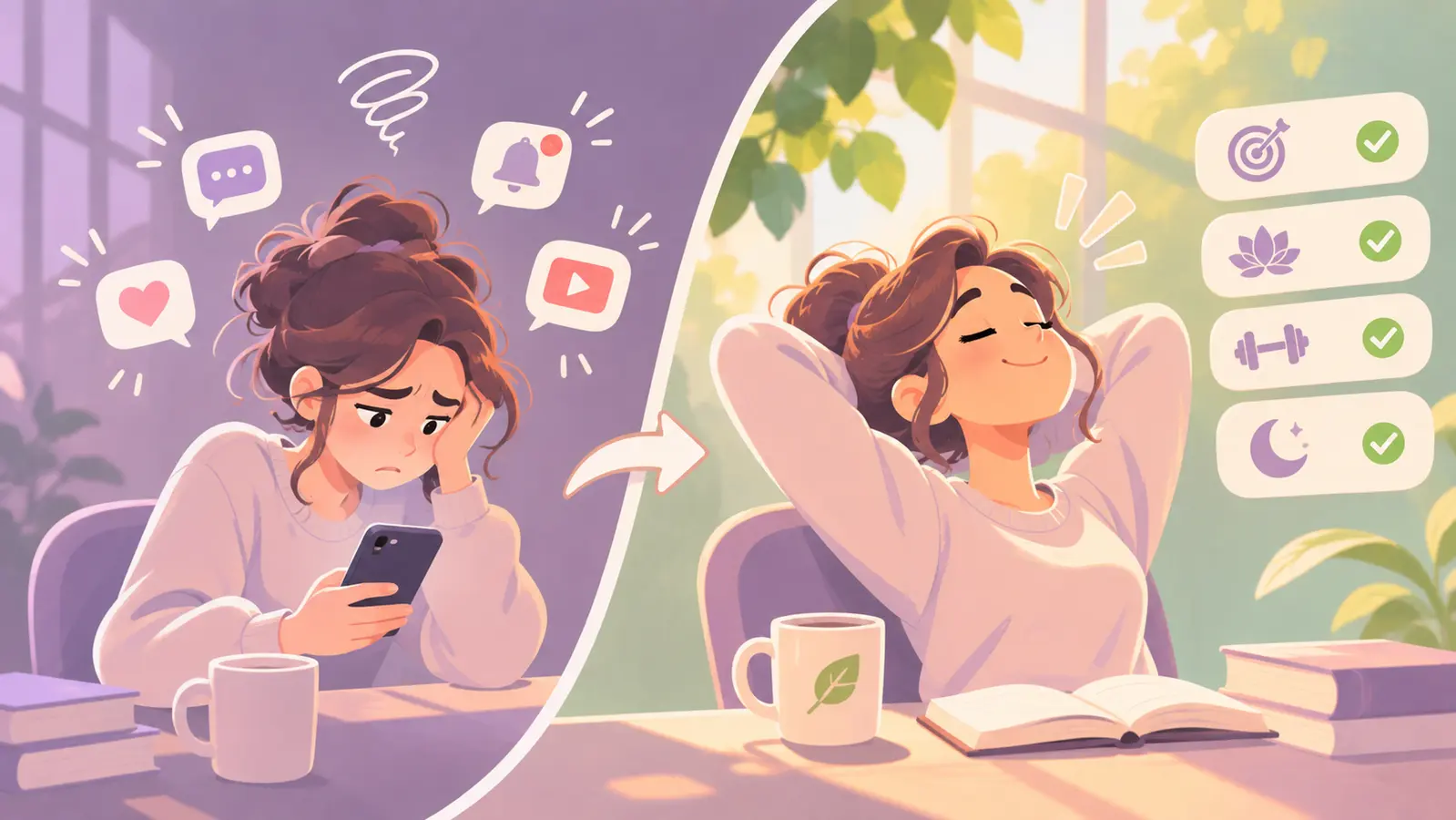
Discover how reducing mindless screen time can improve focus, sleep, and wellbeing while making room for what matters most.
You pick up your phone to check a message, glance at a notification, or look something up. Before you know it, twenty minutes have passed, and you're scrolling through something you never intended to open.
Sound familiar?
We like the internet. It helps us learn, create, work, and stay connected. But it's also made it incredibly easy to spend more time on our screens than we intended.
The good news? Research suggests that reducing recreational screen time can improve mental wellbeing, sleep, and focus. And you don't necessarily need to give up your favorite apps to experience the benefits.
1. Better Mental Health and Wellbeing
One of the most encouraging benefits of limiting screen time is its potential impact on mental wellbeing.
A 2022 randomized study published in npj Mental Health Research involving 164 adults found that participants who substantially reduced their recreational screen time experienced an 8.48-point greater improvement on the WHO-5 Well-Being Index compared with the control group over two weeks. They also reported improvements in mood, although researchers didn't find consistent changes in biological stress markers.
Similarly, a 2025 randomized controlled trial involving 111 university students found that reducing smartphone use to two hours per day for three weeks led to small-to-moderate improvements in wellbeing, depressive symptoms, and stress.
While these studies don't prove that every person will benefit equally, they suggest that spending less time on recreational screens can make a meaningful difference in how we feel.
2. Improved Sleep Quality
If you've ever stayed up later than planned because you couldn't stop scrolling, you're certainly not alone.
A 2025 study published in JAMA Network Open, analyzing more than 122,000 adults, found that people who used screens daily before bed had a 33% higher prevalence of poor sleep quality compared with those who avoided screens before bed. They also averaged approximately 50 fewer minutes of sleep per week.
Although this study found an association rather than proving cause and effect, the findings are a good reminder that our evening screen habits may affect our rest.
Even small changes can be worthwhile. A separate 2025 pilot study involving 55 participants found that daily pre-sleep device use decreased by an average of 23.4 minutes, while sleep duration increased by an average of 12.7 minutes across the study groups.
You don't need to eliminate every screen from your evening. Setting a boundary around social media before bed can be a reasonable place to start.
3. Better Focus and Fewer Distractions
Sometimes, the biggest problem with screen time isn't how long we spend scrolling, but how frequently it interrupts everything else.
Think about how often you check your phone while working, studying, reading, or spending time with someone. Even brief interruptions can make it harder to maintain your attention.
A 2023 experiment published in the Journal of Occupational Health involving 247 participants found that reducing automatic notifications during a workday helped reduce interruptions, improve performance, and lower reported strain, although benefits varied among participants.
The takeaway is fairly simple: protecting your attention before an interruption happens can be more effective than constantly trying to regain your focus afterward.
Turning off unnecessary notifications, setting scheduled limits, and creating uninterrupted focus sessions are all practical places to begin.
4. More Time for the Things That Matter
Beyond the research, there's another potential benefit of limiting screen time that's harder to measure: what you get to do with the time you reclaim.
Maybe it's spending more time with friends and family, getting outside, exercising, reading, or making progress on something you've been putting off. Sometimes it's simply enjoying a quiet moment without automatically reaching for your phone.
And that's an important distinction. Not all screen time is bad, and a lower number on your Screen Time report doesn't automatically mean a better life.
What matters is having more control over how you spend your attention.
Building Healthier Screen Time Habits
Knowing the benefits of reducing screen time is one thing. Actually changing your habits is another.
The 2025 university study mentioned earlier found that participants' screen time began increasing again after the intervention ended. It's a useful reminder that maintaining healthier habits can be more challenging than making a short-term change.
That's part of why we built LightScroll, a screen time app for iPhone and Mac designed to help people use technology more intentionally.
Instead of requiring you to delete distracting apps, LightScroll lets you create customizable Controls around them. You can set daily allowances, create scheduled restrictions, and use repeatable timed focus sessions.
LightScroll also introduces a little Friction before opening distracting apps and websites, such as a short wait, breathing exercise, or mini-game. That small pause can help interrupt the automatic impulse to scroll and give you a chance to reconsider.
For additional support, features like accountability partners, Hardcore Mode, streaks, and XP can help you follow through on your commitments and recognize your progress.
The goal isn't to make using technology difficult. It's to make using it intentionally a little easier.
Make Room for Life Beyond the Screen
Research offers encouraging evidence that reducing recreational screen time can support better mental wellbeing, sleep, and focus. But there's no perfect daily screen time number that works for everyone.
We believe the best approach is one that fits your life, protects your attention, and leaves room for the technology you genuinely enjoy.
You don't have to delete every app or get everything right every day. Small, sustainable changes can be a meaningful place to start.
That's why our mission with LightScroll is simple: make room for life beyond the screen.
Try LightScroll for free on iPhone or Mac, and start building a more intentional relationship with technology.